



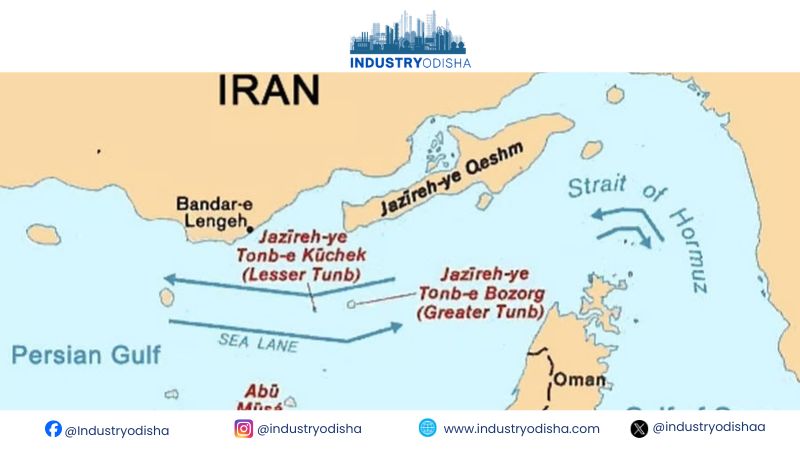
Industry Odisha Bureau, Sep 07: Iran is close to finalizing a controlled shipping corridor through the Strait of Hormuz. The route would pass through both Iranian and Omani waters. Tehran is separately preparing a new maritime exclusion zone. Both steps unfold against the backdrop of an ongoing regional war.
Mohsen Rezaei, secretary of Iran’s Supreme National Security Council, disclosed the corridor talks on state television. He said Tehran has been negotiating shipping-route maps directly with Oman. The goal is a defined framework for commercial vessel transit. Rezaei stressed that Iran would control the corridor’s entry and exit points. A fuller reopening, he added, depends on the US halting strikes on Iranian targets.
Alongside the corridor, Iranian officials outlined plans for a restricted zone near the Strait’s mouth. Rezaei said its boundaries would begin at the US naval blockade line. From there, the zone would stretch through the Strait into the Persian Gulf. Ships entering without Iranian authorization risk being added to a sanctions list. Officials also indicated such vessels could simply be turned away.
The announcements arrive as military activity in the region picks back up. Reports say US forces struck three Iranian oil tankers over the weekend. That followed Iran launching ballistic missiles toward US warships in the Gulf. The exchange marks a sharp escalation after a month of comparative calm. The wider conflict traces back to US and Israeli strikes launched against Iran in February.
Global energy markets have long depended on the Strait of Hormuz staying open. The waterway has historically moved close to a fifth of world oil and LNG supplies. Any prolonged disruption there tends to unsettle shipping insurance, routing and energy pricing. That backdrop makes Tehran’s latest moves significant well beyond the region.
Commercial traffic through the Strait has already thinned considerably during the conflict. Iranian officials point to naval blockades and repeated military exchanges as the cause. Washington, for its part, says naval escorts still allow limited commercial passage. Tehran disputes that characterization, insisting the waterway remains largely closed to unauthorized ships.
Oman’s role gives the corridor talks a diplomatic dimension beyond Iran alone. The two countries have discussed passage arrangements over several months. Muscat has not publicly confirmed any finalized route or agreement. Oman has often served as an intermediary in the broader regional standoff.
For shipping companies, the two proposals carry different practical implications. A managed corridor would offer a defined, sanctioned path for transit. An exclusion zone instead creates an area requiring prior Iranian clearance. Tanker operators, cargo insurers and energy traders are expected to track both closely.
Neither Oman nor Washington has confirmed the corridor’s final terms. Iran continues to tie a broader reopening to a lasting ceasefire. Until that holds, the Strait’s commercial status is likely to stay unsettled.
