



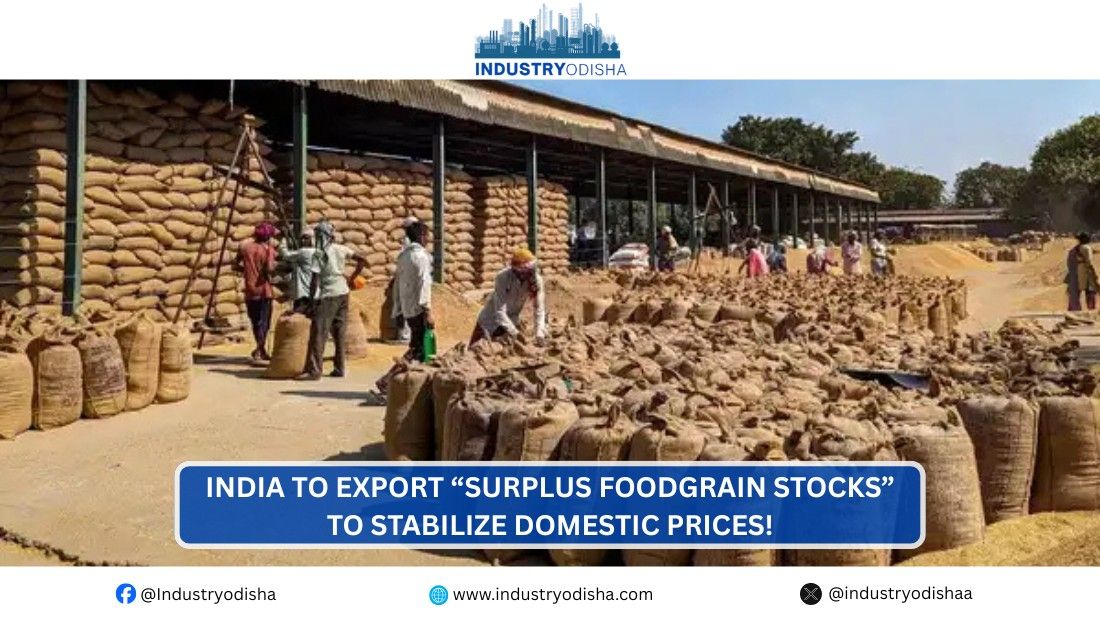
Industry Odisha Bureau, April 22: Since India’s foodgrain stocks have reportedly been surplus, experts bat for an effective management so that the surplus stocks could be exported to the international markets facilitating India to stabilise its domestic food prices as well as lend a rational support to the Indian farmers apart from averting the unnecessary storage costs and wastage of those surplus stocks.
Data of the Government of India (GoI) reportedly reflects: “The central pool reserves stood at 60.48 million tonnes (MT) as on April 1, that is reportedly three-times the mandate”. As per media reports, the GoI data shows “a robust recovery in wheat reserves and a record-breaking accumulation of rice”.
While rice stocks have been reported to be “38.61 MT higher than the buffer norm of 13.58 MT”, the current stock of wheat reportedly stands at “21.79 MT, 85% higher than the year-ago level of 11.79 MT and nearly three times the operational buffer norm of 7.46 MT”.
Economists have reportedly advocated for a “well-calibrated foodgrain stock management”.
Noted economist-cum-former Chief Statistician of India Pronab Sen has reportedly viewed, “The government is increasingly procuring stocks not just because it needs to maintain buffer reserves for contingencies, but also as a preventive measure to avoid a price crash.”
Meanwhile, reports revealed that the GoI is stepping up for boosting wheat exports as it reportedly “approved an additional 2.5 MT of wheat exports to support farmgate prices and manage the growing stockpile”.
Similarly, All India Rice Exporters Association (AIREA) President Satish Goel reportedly stressed, “Proactive export measures would not just help manage excess stocks efficiently but also strengthen India’s position in the global rice market.”
“Higher overseas shipments could help ease surplus pressure, stabilize prices and support rice farmers’ incomes”, Goel has reportedly underlined.
