



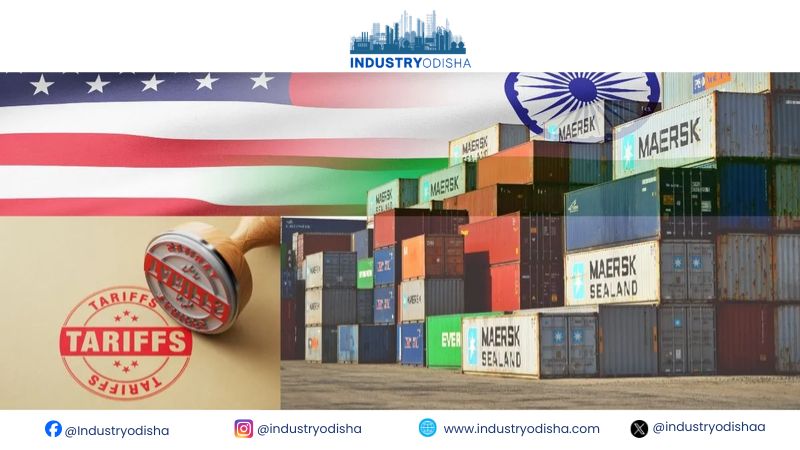
Industry Odisha Bureau, Aug 14: The United States Senate has advanced legislation proposing tariffs of up 100% on countries importing Russian oil in substantial quantities. India would likely face such penalties if the Lindsey O. Graham Sanctioning Russia and Iran Act of 2026 becomes law. However, New Delhi has described recent conversations with Washington regarding the proposed sanctions as reassuring, suggesting diplomatic channels remain open. The development highlights the strategic balancing act India must perform between energy security interests and its relationship with the United States.
The proposed 100% US tariffs directly target India’s energy-import strategy, given that Russian crude now accounts for approximately 48% of India’s oil purchases. This makes the legislation particularly significant for New Delhi’s economic planning. The bill has cleared the Senate but still requires introduction and voting in the House before becoming law, meaning the tariff proposal remains preliminary rather than implemented policy.
India’s reassuring discussions with Washington extend beyond the sanctions legislation to broader trade negotiations. Both nations concluded a trade deal framework on February 3, 2026, with a joint statement issued four days later. That agreement included commitments regarding preferential market access, though certain tariff provisions became irrelevant following the Supreme Court’s cancellation of reciprocal tariffs. India currently faces 10% tariffs on 55% of its exports to America, stemming from a prior investigation concerning forced labour in imports.
Additional complexity emerges from a second ongoing United States investigation examining whether India and other countries exploit excess capacity to export goods to America. Such a determination could trigger further tariff escalation beyond existing measures. Commerce Secretary Rajesh Agrawal stated that India remains actively engaged with Washington on these trade matters, signalling that New Delhi is pursuing negotiated solutions rather than confrontational responses.
The proposed sanctions legislation represents the intersection of three policy domains: American sanctions against Russia and Iran, United States tariff strategy toward India, and Washington’s broader foreign-policy objectives regarding energy security. For India, the challenge involves maintaining its Russian energy imports while preserving the positive momentum from recent trade negotiations. The outcome depends partly on House proceedings and partly on whether India-US diplomatic engagement can mitigate tariff pressure before any final legislation passes.
