



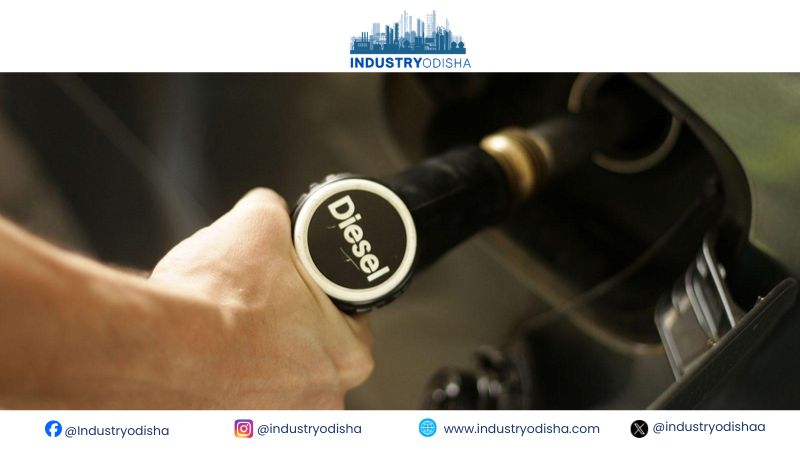
Industry Odisha Bureau, Sep 09: State oil companies are losing 25-35% of bulk diesel sales. Many businesses are shifting to cheaper retail pumps instead. The bulk-retail price gap has widened sharply this year.
State-run oil marketing companies are losing 25-35% of bulk diesel sales. Many customers are switching to cheaper retail pumps instead. They are avoiding a ₹38-40 per litre bulk premium. This mirrors a similar shift during the US-Iran conflict. Government concerns about fuel diversion also arose earlier.
Bulk diesel prices track international rates more closely. Arab Gulf diesel averaged about $157 a barrel this month. That is down from $188 in April. It remains roughly 80% above February levels. Domestic refiners haven’t raised retail prices since May. They continue adjusting bulk rates in line with global markets.
The bulk-retail gap was ₹34-35 per litre in August. It has since widened to about ₹38-40 per litre. In Mumbai, bulk diesel costs roughly ₹137 a litre. Retail diesel there costs about ₹97.8 a litre. Similar patterns appear in other major Indian cities. These figures highlight the scale of the pricing divergence.
Large institutional buyers still use regular bulk channels. These include defence, railways and manufacturing companies. Smaller contractors and miners are more price-sensitive. Road builders and other businesses are shifting too. They aim to contain fuel costs and protect margins. State road transport corporations already buy at retail rates. The price gap matters more at commercial fuel volumes. This distinction separates institutional buyers from smaller operators.
Crude oil prices are nearing $100 a barrel. That is also pushing up diesel rates globally. Refinery disruptions in Russia and the Gulf matter more. Ukrainian drone attacks have hit Russian refinery output. Strait of Hormuz disruptions have curbed Gulf refinery runs. Together, these disruptions have squeezed global diesel supplies. Both regions rank among the world’s largest diesel exporters.
Bulk sales made up about 12% of India’s diesel demand before the conflict. Losing a large share of that segment still matters commercially. This does not mean overall diesel demand has fallen similarly. Bulk diesel still represents an important sales channel. Losing volume there can affect overall sales patterns.
A similar shift happened during the US-Iran conflict earlier. Pump prices stayed steady while bulk rates rose sharply. That mismatch caused panic buying and temporary shortages then. Authorities briefly rationed retail diesel sales that June. The curbs were lifted once global oil prices eased. The earlier shift also affected diesel demand patterns broadly. Restrictions were introduced only after diversion concerns grew.
The current gap may narrow if diesel prices ease. Refinery availability in Russia and the Gulf remains crucial. Until then, businesses may keep favoring retail pumps. No specific timeline exists for prices to stabilize. Refinery recovery elsewhere could eventually ease the pressure.
