



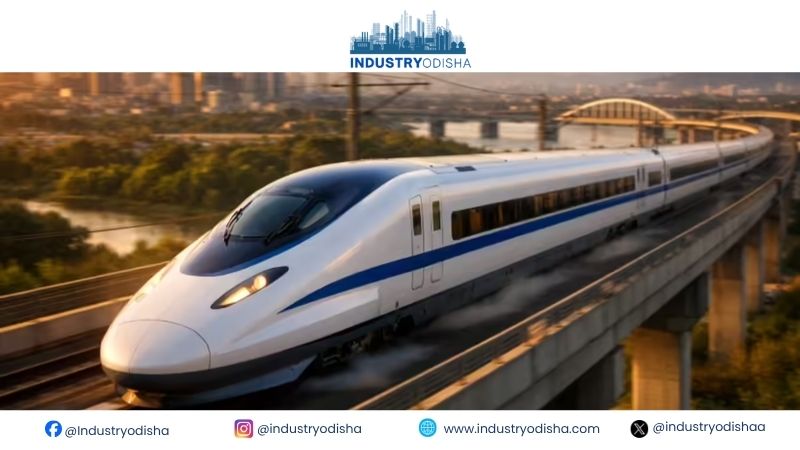
Industry Odisha Bureau, Aug 29: India’s first high-speed rail corridor is moving steadily toward becoming fully operational soon. The Mumbai-Ahmedabad bullet train project now combines Japanese technology with growing domestic manufacturing ambitions. Authorities are preparing the initial operational section between Surat and Bilimora shortly. This development matters significantly for both railway infrastructure and India’s broader industrial capability goals.
The National High Speed Rail Corporation Limited is developing the project with Japanese technical support. Trainsets for the initial phase are arriving directly from Japan for deployment. The Japan International Cooperation Agency has provided financing worth approximately ₹1.1 lakh crore. Full project completion remains targeted for 2030, according to available official information.
Indigenous manufacturing is now gaining momentum alongside this Japanese-supported infrastructure development process. Integral Coach Factory, Chennai, awarded BEML Limited a substantial ₹866.87 crore contract. This contract covers designing, manufacturing and commissioning two eight-coach high-speed trainsets domestically. These prototypes, carrying codename B-28, target speeds reaching approximately 280 kmph.
Each indigenously produced high-speed train is expected to cost around ₹390-400 crore. BEML’s work continues at its Aditya High-Speed Rail Complex located in Bengaluru. This complex was established specifically for domestic high-speed trainset production and assembly. The trainsets will feature air-conditioned chair cars with reclining, rotatable seating options. Infotainment systems and dedicated facilities for divyangjans are also planned features.
India’s tropical climate demands trainsets designed differently from Japanese and European counterparts. Local conditions involving heat, dust and monsoon require specific engineering considerations throughout. Japanese and European bullet trains, by contrast, are designed primarily for colder climates. Railway Minister Ashwini Vaishnaw has indicated future trains could reach 350 kmph.
This next-generation speed target remains distinct from the current B-28 prototype capability. The project also faced delays and cost overruns from various contributing factors. Land acquisition difficulties, statutory clearances and train finalisation processes all caused delays. Indian Railways is simultaneously planning additional high-speed corridors for future development consideration.
These planned routes include Bengaluru-Chennai, Bengaluru-Hyderabad and Bengaluru-Pune-Mumbai connections among others. Indigenous manufacturing through BEML and ICF could strengthen India’s railway engineering capabilities. This localisation effort aligns with broader Make in India industrial policy objectives nationally. Ultimately, sustainable domestic high-speed rail capability will determine this initiative’s long-term significance.
