



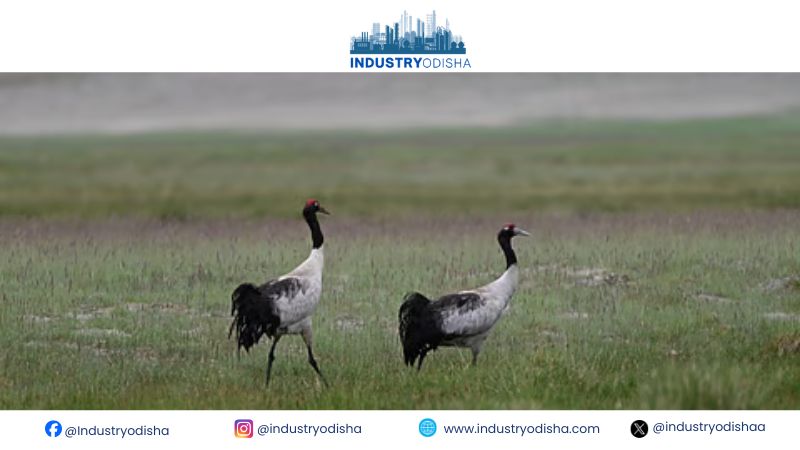
Industry Odisha Bureau, Aug 14: More than 2,950 free-ranging dogs have undergone sterilization in Ladakh under conservation initiatives. This sterilization programme aims to protect vulnerable Black-necked Cranes and support wildlife-based community livelihoods. The Bombay Natural History Society, the Indian Army, and government departments jointly lead efforts.
The initiative began in 2022 after researchers observed free-ranging dogs killing Black-necked Crane chicks. Dogs were preventing nesting birds from settling in Alpine Wetlands across Ladakh’s critical breeding areas. Free-ranging dog populations created substantial disturbance to breeding activities throughout the region’s wetland landscapes.
Black-necked Cranes remain globally listed as vulnerable despite their cultural significance in Ladakh. The species represents the state bird, yet fewer than one hundred survive in India. The global population spans approximately 11,000 to 12,000 individuals, mostly on the Tibetan Plateau.
Annual monitoring by BNHS records between 110 and 130 individuals across Ladakh’s wetlands. Approximately 20 to 25 breeding pairs are typically documented depending on yearly monitoring conditions. Recent monitoring in June 2026 recorded 19 pairs across key breeding sites.
Important breeding habitats include Changthang Cold Desert Wildlife Sanctuary and adjacent wetland ecosystems. Hanle, Tso Kar, Nyoma and nearby marshes support significant crane populations seasonally. The Suru Valley also hosts an extended population of these globally vulnerable birds.
BNHS scientist Dr Muhammad Raza noted actual populations likely exceed current recorded figures. Limited accessibility and logistical challenges prevented complete surveys of all potential breeding areas. BNHS continues implementing measures to better understand the complete breeding population distribution.
The conservation programme combines sterilization with waste management and biodiversity awareness initiatives. A pilot project at selected Indian Army outposts improves food and kitchen waste handling. Reduced anthropogenic food availability helps limit populations of free-ranging dogs sustainably.
One thousand armed forces personnel have received biodiversity conservation and wildlife management training. The integrated approach addresses multiple pressure sources on Black-necked Cranes and broader wildlife. Long-term sustainable protection requires addressing both dog populations and habitat degradation simultaneously.
