



Industry Odisha Bureau, May 14: Hyderabad-based pioneering private aerospace manufacturer and commercial launch service provider as well as India’s first spacetech unicorn – “Skyroot Aerospace Private Limited” – has reportedly launched ESOP for its two co-founders akin to the SpaceX’s reported offering to its founder Elon Musk.
Notably, “ESOP stands for Employee Stock Ownership Plan or Employee Stock Option Plan. It is an employee benefit scheme where companies grant employees the right to purchase or own shares in the organization aiming to align worker interests with company performance and provide long-term wealth creation.”
As per the ESOP reportedly rolled out by Skyroot, its founders duo – co-founder and CEO Pawan Kumar Chandana and co-founder and COO Naga Bharath Daka “can earn up to 4% equity in the company if they hit some big goals by December 2028, like launching a satellite, making real revenue, and raising $100 million at a $1 billion-plus valuation”, media reports said.
Pertinently, Chandana and Daka worked at Indian Space Research Organisation (ISRO) before founding Skyroot in 2018.
Also need to be mentioned here that, Skyroot has named its small-lift launch vehicles ‘Vikram’ in honour of globally-acclaimed iconic Indian astrophysicist Vikram Sarabhai who has already carved a niche as the first chairperson of the ISRO.
Media reports, meanwhile, said, “Backed by Singapore’s GIC, BlackRock and Ram Sriram, Skyroot Aerospace became India’s first spacetech unicorn on May 7 this year by raising $60 million in fresh funding at a $1.1 billion valuation.”
Speaking on the utilisation of the funds raised, Skyroot CEO Chandana has reportedly elucidated that “the funds will be channelled into building infrastructure to scale Vikram-I operations, supporting a pipeline of future launches, and driving the development of the next-generation Vikram-II rocket.”
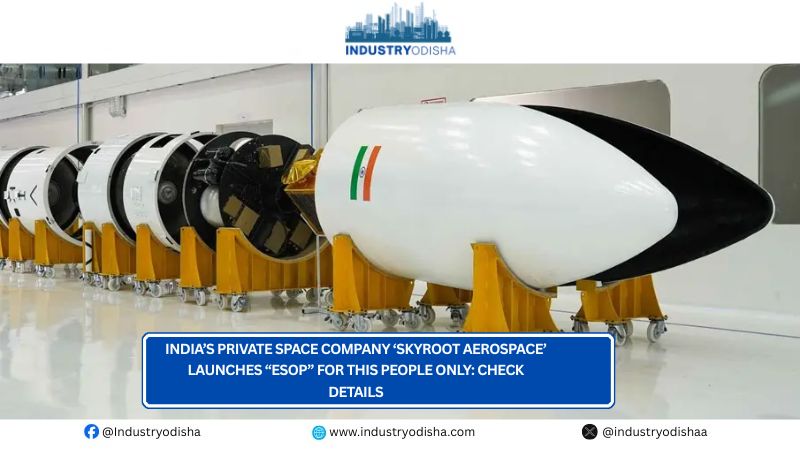
As reported by Forbes news portal, “Vikram-I is India’s first privately built multi-stage orbital vehicle. The four-stage rocket, designed to carry small satellites into space, is expected to lift off in the coming weeks. The heavier-lift Vikram-II will expand the company’s capabilities by ferrying larger payloads across multiple orbits.”
Since the global space economy is reportedly “shifting towards mega-constellations”, media reports contend that the giant companies need “agile, frequent and affordable ‘space taxis’ instead of ‘massive heavy-lift rocket’ for launching small satellites providing global internet, climate monitoring, and Internet of Things services”.
Thus, “Skyroot’s Vikram-I and Vikram-II rockets are reportedly designed specifically for the prime purpose,” averred media reports, adding, “Vikram-1 rocket is designed for orbital flight and can deploy satellites weighing up to 350 kg in low earth orbits below 500 km in altitude.”
Also it has been reported, “Skyroot aims to secure a significant foothold in a global space economy projected to reach $1.8 trillion by 2035.”
To sum up media reports, “Skyroot first launched its suborbital rocket ‘Vikram-S’ in November 2022 that could only reach an altitude of 88.8 km. However, its plan to put a satellite into orbit has been delayed, with an initial launch planned first for 2024 and subsequently by March this year.”
