



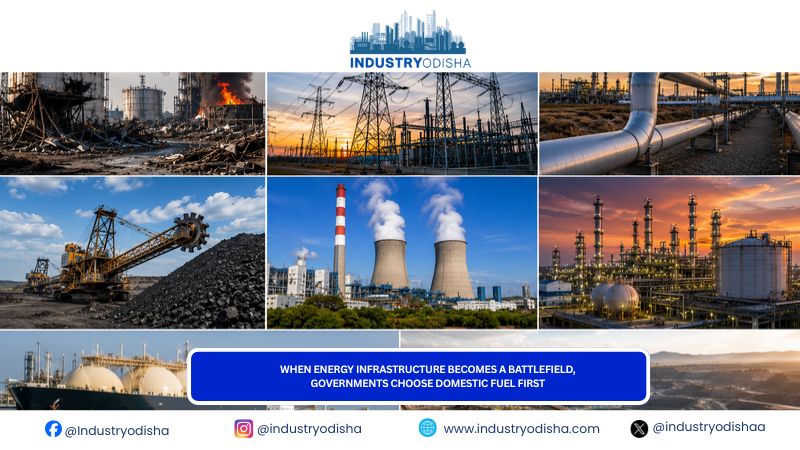
Industry Odisha Bureau, Jul 31: Refined petroleum products have become a surprisingly effective weapon in modern conflicts. As targeted infrastructure damage reverberates through global fuel markets, governments are increasingly prioritizing domestic energy stability over export revenues a calculus shift that is reshaping refined fuel trade across continents.
Russia extended its restrictions on diesel and gasoline exports through January 2027, representing an ongoing response to infrastructure vulnerabilities that have disrupted domestic petroleum supplies and inflated fuel costs. The decision reflects a pattern now visible across energy-exporting nations: when production capacity faces direct assault, governments implement export controls to ensure adequate domestic availability, even at the cost of surrendering export earnings and international market share.
The disruption traces to repeated attacks on Russia’s refining infrastructure throughout 2026, creating acute fuel shortages that triggered price volatility in domestic markets. Earlier restrictions covering gasoline and jet fuel preceded the latest extensions, signalling how supply pressures have intensified rather than stabilized. Rather than allow market mechanisms to allocate scarce refined products globally, Moscow designated fuel supplies for domestic priority uses: agricultural operations entering peak harvest seasons, government institutions, and essential services.
The policy architecture reveals pragmatic flexibility. Beginning in September, producers gained exemptions for certain fuel categories diesel, marine fuel and gas oils while maintaining restrictions on others. Parallel tracks permit fuel exports through intergovernmental agreements and humanitarian channels, preserving diplomatic relationships while insulating domestic markets from international price fluctuations.
This approach acknowledges an asymmetry between crude oil and refined products. While crude can be sold internationally and re-imported as finished fuel, refined petroleum requires immediate domestic stability to prevent cascading disruptions across agriculture, transportation and industrial sectors. Diesel particularly matters: it powers freight logistics, agricultural machinery and mining operations whose interruption creates downstream economic damage exceeding temporary export foregone.
The precedent matters for global energy architecture. As infrastructure becomes militarized, energy-exporting nations will likely adopt defensive export policies as standard practice, fragmenting previously integrated international fuel markets and creating localized supply constraints. This may accelerate long-term investment in regional refining capacity and strategic reserves as countries insulate themselves from geopolitical volatility in petroleum trade routes.
