



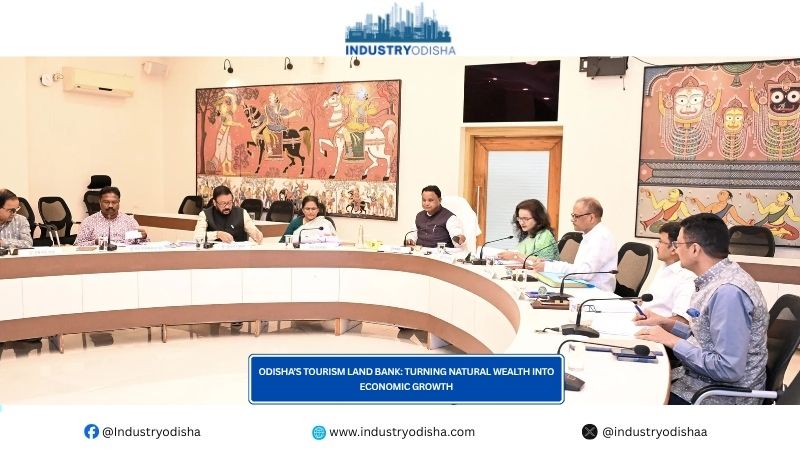
In a bid to fast-track tourism-led economic growth, Odisha Cabinet recently approved a ‘Land Bank for Hospitality Infrastructure’ scheme. It aims at creating a ready pool for hotels, resorts and allied facilities across the state.
The initiative, comprising both private and government land parcels worth around 5,500 acres with an estimated investment of Rs 1,500 crore will be identified and developed. According to officials, the key tourism destinations, include Chilika, Konark, Puri (Shamuka), Dhauli, Hirakud, Satkosia, Similipal, Bhitarkanika, Daringbadi and the Buddhist circuit, among others. More locations may be added based on tourism potential and destination-specific requirements.
Tourism contributes nearly 9-10 per cent of India’s GDP and supports millions of jobs directly and indirectly. States such as Rajasthan, Goa and Kerala have successfully leveraged tourism infrastructure to create substantial local employment and attract private investment.
For decades, Odisha has enjoyed an abundance of natural beauty, cultural heritage and spiritual attractions, yet it has consistently underperformed as a tourism destination compared to states with far fewer assets. From the pristine beaches of Puri and Gopalpur to the biodiversity of Bhitarkanika and Similipal, and from the architectural grandeur of Konark to the serenity of Chilika, Odisha possesses all the ingredients required for a thriving tourism economy. What it has lacked is adequate tourism infrastructure.
The Odisha government’s decision to launch the Tourism Land Bank Scheme seeks to address precisely this gap.
Advantages
Secures Land Parcels in Advance
It is a known fact that land acquisition remains one of the most complex and time-consuming aspects of any large project in India. Investors often spend years navigating ownership disputes, regulatory clearances and infrastructure deficiencies before a single brick is laid. The Tourism Land Bank Scheme seeks to reverse this equation by identifying, securing and preparing land parcels in advance, allowing developers to focus on building hotels, resorts, convention centres and eco-tourism facilities rather than battling bureaucracy.
Attract Investors
Tourism projects typically involve investments ranging from ₹50 crore to several hundred crore rupees depending on scale. By creating a ready inventory of tourism-ready land parcels, the government reduces investment risk and project gestation periods. A government expenditure of ₹1,500 crore on land preparation could potentially attract several times that amount in private investment. Even a conservative investment multiplier of 1:5 would translate into ₹7,500 crore or more in private-sector investment, while a higher multiplier could push the figure well beyond ₹10,000 crore.
Generate Employment
Tourism is among the most labour-intensive sectors of the economy. Unlike manufacturing, which often relies heavily on automation, tourism creates jobs at multiple levels: Hotel and resort staff, tour guides, drivers and transport operators, restaurant workers, event managers, local artisans and handicraft sellers. Every hospitality project creates both direct and indirect employment opportunities, particularly for youth and women. Industry estimates suggest that every 100-room hotel can generate 150-250 direct jobs and an even larger number of indirect jobs in transportation, food supply, handicrafts, maintenance and tourism services. If the land bank facilitates even 100 medium and large hospitality projects over the next decade, Odisha could potentially create thousands of direct and indirect jobs.
Promote Balanced Regional Development
Many of the proposed tourism destinations such as Daringbadi, Deomali, Satkosia and parts of southern Odisha are economically less developed compared to coastal districts. Tourism infrastructure can bring better roads, improved connectivity, new business opportunities and higher local incomes. The planned initiative will spread economic growth beyond major urban centres like Bhubaneswar and Puri. It will also strengthen local economy as tourists staying in resorts would be attracted to agricultural produce from local farmers, fish and seafood from local communities, handicrafts and souvenirs from artisans.
Boosts Revenue for the State
Higher tourist footfall and increased hospitality investments can generate revenue through: GST collections, property taxes, registration fees and tourism-related economic activity. This will create additional fiscal resources that can be invested in public infrastructure and social welfare programmes.
The biggest benefit of the Tourism Land Bank Scheme is that it will shift Odisha’s tourism policy from merely promoting destinations to actively creating the infrastructure needed to support them. In essence, the government is spending ₹1,500 crore not merely to create a land bank, but to unlock potentially thousands of crores in investment, thousands of jobs and a stronger tourism economy. If implemented effectively, it could mark the beginning of a transition from destination-based tourism promotion to tourism-led economic development.
