



Bhubaneswar, February 19: The industrial sector has been a key driver of Odisha’s economic progress with a share of 41.3 percent of Gross State Value Added and contributing around Rs 3.6 lakh crore, as per Economic Survey Report 2025-26 released today.
The sector registered a growth of 6.4 percent at constant prices, which is fuelled primarily by robust expansion in manufacturing, which is expected to grow at 8.3 percent as against the National average of 7 percent, the report said.
Industry sector consists of mining and quarrying, manufacturing, construction and electricity, water and utilities. The sector provides employment to nearly 59 lakh workers as per last available Government of India estimates for 2023-24 which is an increase from 39 lakhs workers in 2011-12.
The Sector provides employment to more than ¼ of the workers in the State. Odisha’s industrial strength is built on its abundant mineral resources, surplus power availability, and strategic coastal access.
Odisha possesses abundant mineral resources including coal, iron ore, aluminium, and bauxite. These resources are critical for India’s increasing energy demand and steel/aluminium consumption.
In 2025, the State Government has approved 244 new projects with a cumulative proposed investment of Rs 5.66 lakh crores, projected to generate employment for about 3.35 lakh persons.
During 2025, 80 projects were successfully implemented during the year, attracting Rs 1.75 lakh crores in investments and directly creating 1.4 lakh employment opportunities. The State is attracting investments across a diverse range of sectors covering labour intensive as well as high-tech intensive industries.
Similarly, the State has implemented comprehensive reforms to improve the business environment. The state achieved a 98% implementation rate under the Business Reforms Action Plan (BRAP) 2024, completing 425 out of 434 reforms.
The State focused on creating industry-ready infrastructure through mega industrial regions, sector-specific parks, and MSME clusters. Major developments include progress in Paradip PCPIR and Kalinga Nagar zones, completion of Seafood Park, Electronic Manufacturing Cluster, and development of 30 MSME parks across all districts.
Odisha also launched the Pharmaceutical and Medical Devices Policy 2025, targeting Rs 25,000 crores investment and one lakh jobs by 2030.
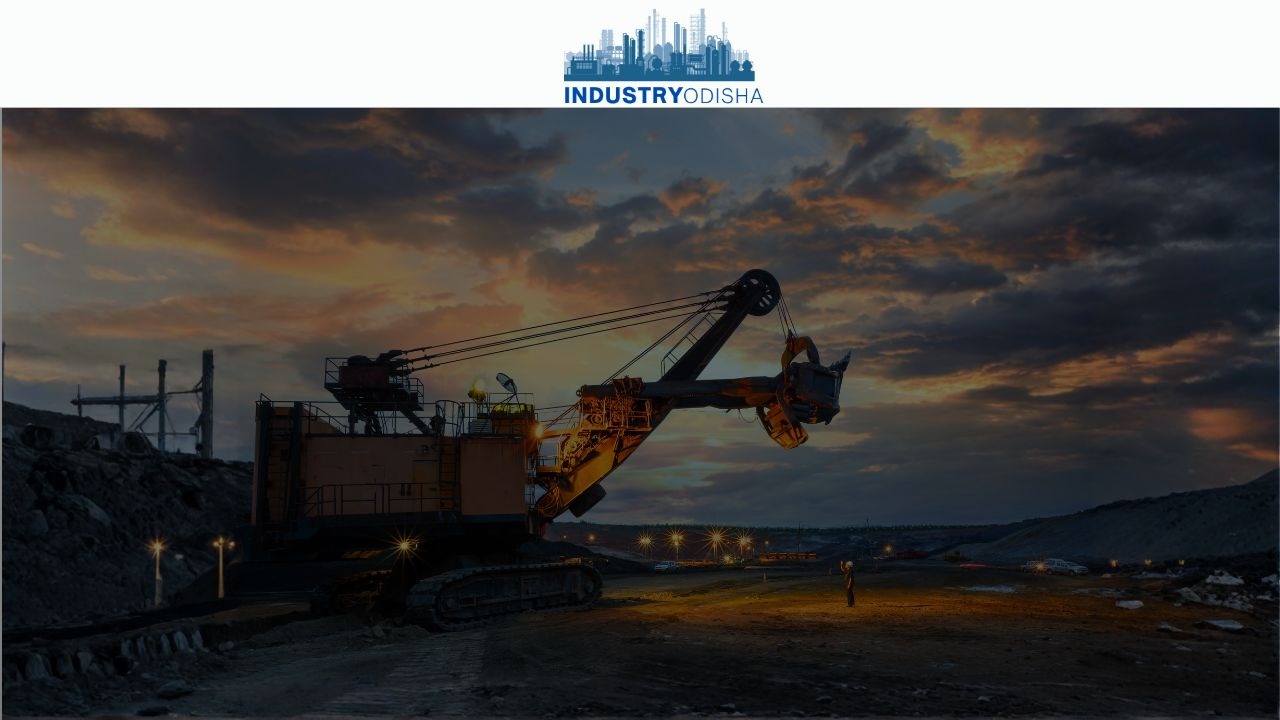
Mining and Quarrying contributes about 23.1 per cent of industrial GVA, with a value of around Rs 0.8 lakh crore and grew by 1.4% in 2025-26 from the last year. The subsector supplies key minerals to metal and other industries and remains an important source of fiscal revenue and industrial linkages, especially in mineral-rich districts.
The Government of Odisha has taken several initiatives to boost female workforce participation in the manufacturing sector. A total of 13 workers’ hostels is being established across 9 districts and 12 industrial estates, with a cumulative bed capacity of approximately 25,000 beds.
The hostels are located at major industrial centres including Rourkela, Khordha, Kalinga Nagar, Paradip, Jharsuguda, Sambalpur, Balasore and Cuttack, and include dedicated facilities such as a working women’s hostel at Deras.
This initiative is expected to improve living conditions for industrial workers, enhance workforce availability near industrial estates, and contribute to sustained and inclusive industrial development in the State, the report said.
Manufacturing sector globally is subject to two key trends, i.e. intensification of Technology and focus on sustainability (clean manufacturing, circular economy).
Odisha in its Vision 2036 and 2047 intends to channelize development of the manufacturing sector in the State around these themes.
The State aims to achieve manufacturing GSVA of nearly Rs 40 lakh crores from current Rs 1.6 lakh crores. Odisha has set a goal to be India’s leading end-to-end manufacturing hub leveraging both domestic and export opportunities, it said.
As per latest available estimates for 2023-24, the unorganized sector comprises 8.05 lakh enterprises (constituting 99.6 per cent of total manufacturing enterprises). It employs nearly 13.2 lakh workers (78 per cent of total manufacturing employment).
The unorganized sector’s economic contribution is relatively modest, generating nearly 3 per cent of total manufacturing output and 8-9 per cent of total manufacturing GVA.
However, the organized sector, though significantly smaller with 3,281 enterprises employing 3.7 lakh workers, demonstrates far greater productivity. It contributes Rs 5.25 lakh crore in output and nearly Rs 75,000 crore in gross value added. This provides a tremendous opportunity to boost industrial output.
Between 2023-24 and 2024-25, Odisha’s steel sector exhibited significant growth. The installed capacity rose from 41.2 MTPA to 45.5 MTPA, accounting for about 23 per cent of the country’s total steel capacity. Production also increased from 27.3 MTPA to 29.6 MTPA, reflecting better capacity utilization and operational efficiency. This growth underscores Odisha’s strengthening role in the national steel industry and its capacity to meet increasing demand.
Similarly, in the last five years aluminium production has grown from 36.1 lakh tonnes in 2020-21 to 42 lakh tonnes in 2024-25.
NALCO’s production has remained relatively stable around 4.6 lakh tonnes, reflecting steady output. BALCO has shown a slight consistent increase, reaching 5.8 lakh tonnes in 2024-25. Hindalco’s production peaked in 2023-24 at 13.3 lakh tonnes and remained close to that level in 2024-25. Vedanta’s production fluctuated but saw an increase in 2024-25 to 18.2 lakh tonnes after a dip in 2022-23.
“Aluminium has also become an important export commodity for Odisha. Its export share in State’s total exports grew significantly from 23.4 per cent in 2020-21 to 38.3 per cent in 2024- 25. This growth highlights how the aluminium sector not only supports domestic industries but also plays a vital role in Odisha’s external trade and economic development,” read the report.
