



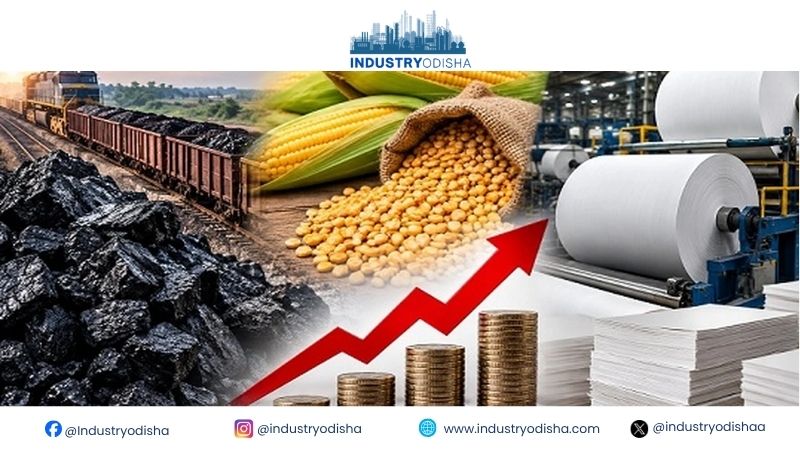
Industry Odisha Bureau, Oct 27: Paper makers seek PM’s help on coal supply after costs jump over 50%.
India’s paper manufacturers have asked the Prime Minister to step in on coal supplies. The Indian Paper Manufacturers Association (IPMA) says coal costs rose over 50% in two months. It also flagged irregular railway rakes and shrinking coal stocks at mills. The association warned some mills may halt production if costs make operations unviable.
IPMA has made two main requests. It wants mills’ captive power plants treated on par with thermal power stations. That covers both coal allocation and movement by railway rakes. It also seeks regular allocation of at least 75% of contracted coal quantities. These are quantities covered under Fuel Supply Agreements (FSAs) or linkages.
Paper making is energy hungry. Mills need steady steam and electricity for pulping, drying and running machines. Many generate both in coal-fired captive power plants. Unlike grid power stations, these units mainly serve the mill itself. When coal arrives late, production planning becomes difficult. Mills may need to hold larger stocks, tying up working capital.
According to IPMA, energy makes up about 15-20% of paper production costs. So a 50% jump in coal costs does not raise total costs by half. But it can still squeeze margins sharply. The impact also varies by mill, product and fuel mix. Not every mill relies on coal alone.
Rail logistics add another layer of risk. Coal often travels long distances from mines to mills by rail. Contracted coal is useful only if rakes deliver it on time. Allocation, dispatch and actual delivery are separate stages. A gap at any stage can leave a mill short of fuel. IPMA’s 75% figure is a request to the government, not an approved policy.
Imports deepen the strain. IPMA says domestic producers face what it calls predatory imports of paper and paperboard. That label is the industry’s view, not an official trade finding. Still, cheaper imports can limit how far mills raise prices. IPMA President Pawan Agarwal said assured coal is essential for continuous paper production. He said mills are caught between rising costs and import competition. Margins are under strain, he added, as mills cannot easily pass on costs. Dependable linkage coal and rakes would offer some relief, he said.
The PTI report did not mention a government response. Any decision would involve balancing competing demands for coal and rail capacity. Thermal power stations supply the grid and serve millions of consumers. Giving industry equal treatment could stretch rake availability further.
Better supply would not fix every problem. Reliable deliveries can ease uncertainty, but they may not reverse higher coal prices. Nor would they remove pressure from imported paper. Each mill’s resilience will depend on its efficiency and finances. For paper makers, dependable coal delivery may matter as much as its price.
