



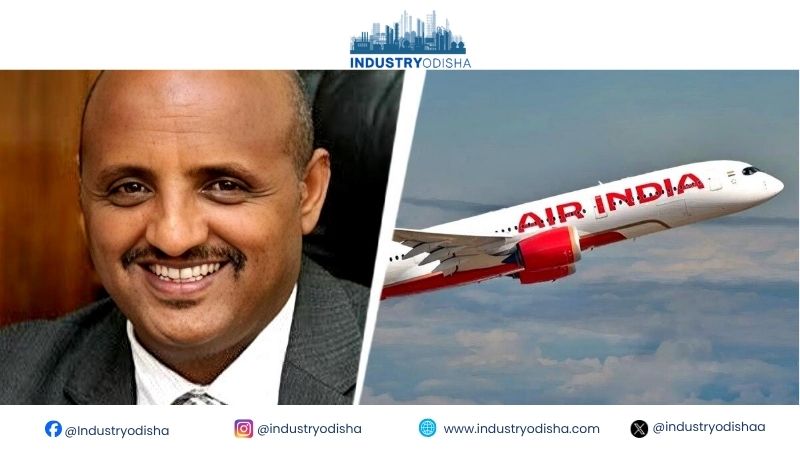
Industry Odisha Bureau, Oct 16: Tewolde Gebremariam has set up a full-time cost-savings team and tightened spending approvals. The move shifts Air India from expansion towards profitability. Airspace closures, fuel costs and currency swings still weigh heavily.
A Turnaround Enters Its Financial Phase
Air India Group’s losses more than doubled in FY26. The consolidated net loss reached ₹22,238 crore, against ₹10,859 crore a year earlier. Group revenue stood at ₹71,870 crore. That figure includes subsidiaries such as catering, ground handling and a GIFT City entity.
Air India posted a standalone net loss of ₹15,368 crore on ₹51,452 crore revenue. Budget carrier Air India Express lost ₹6,767 crore on revenue of ₹19,088 crore.
The airline’s new CEO, Tewolde Gebremariam, is responding with tighter financial controls. The move follows years of heavy investment under Tata Group ownership.
Financial Discipline Takes Shape
Gebremariam has created a full-time, cross-functional cost-savings team. Its task is to review spending and find savings across the group.
Spending approvals now pass through the head of department, CXO and CEO. CXO refers to the airline’s senior executive leadership. The revised approval process took effect on 1 October.
Gebremariam shared the measures with staff on 12 October through Workplace, the internal noticeboard. Mint reported the details after reviewing a copy of the message. He said the changes would bring greater rigour and transparency to decisions.
An employee reward scheme will also recognise ideas that cut costs or lift revenue. Suggested areas include contract renegotiations, procurement and waste reduction.
From Fleet Expansion to Operating Efficiency
The approach marks a shift in emphasis from the previous leadership. Campbell Wilson led Air India after its return to the Tata Group in 2022. His tenure focused on rebuilding the airline.
Vistara was integrated with Air India, and AirAsia India with Air India Express. Wilson also placed large aircraft orders and pushed fleet modernisation.
Gebremariam’s task is to turn that investment into stronger operating performance. At his first town hall on 28 September, he stressed profitable, sustainable growth. He highlighted revenue per available seat kilometre, a key measure of revenue productivity. Safety and operational reliability remained stated priorities.
External Pressures Complicate the Turnaround
Several cost pressures lie beyond management’s direct control. Pakistan’s airspace closure since April 2025 has forced longer westbound routes. The detours raise fuel use, flying time and crew costs. Wilson had estimated the impact at around ₹4,000 crore a year.
The West Asia conflict has added further operational disruption. Supply-chain shortages have also delayed parts of the fleet-modernisation programme. The AI-171 crash in June 2025 brought increased regulatory scrutiny.
Fuel costs are climbing too. Delhi ATF prices rose about 13% in October, to around ₹137 a litre. Air India, Air India Express, IndiGo and Akasa raised fuel surcharges from 9 October. The increases covered domestic and select international routes.
Currency Losses Deepen the Strain
Currency movements have added to the pressure. Air India reported a forex loss of ₹5,033 crore in FY26. That compared with ₹1,299 crore a year earlier. Air India Express recorded a forex loss of about ₹2,370 crore, filings show. Currency swings raise the burden of aircraft leases and other dollar-denominated expenses.
Tata’s Financial Commitment
Tata Sons has invested ₹45,347 crore in Air India since January 2022. Its board has approved in principle a further infusion of over ₹10,000 crore. That funding remains subject to business cases, an executive familiar with the matter said.
Efficiency Becomes the Next Test
Gebremariam said every rupee saved could be reinvested in operations and customer experience. For now, those gains remain a stated goal rather than an achieved result. Tighter spending controls give the turnaround a more formal structure. Yet fuel prices, airspace detours and currency swings remain stubborn costs. The test for Air India is turning investment and discipline into sustainable profitability.
