



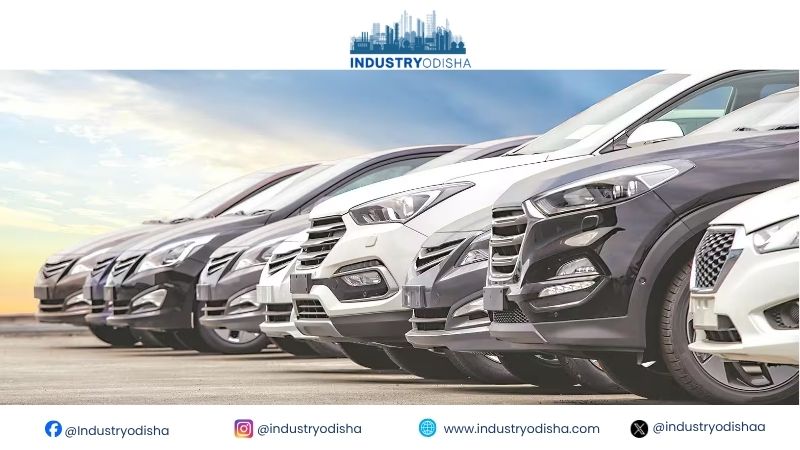
Industry Odisha Bureau, Oct 11: Carmakers have lined up new launches, richer incentives and well-stocked showrooms. Yet a price hike could test affordability. Matching last year’s GST-backed festive sales will not be easy.
India’s festive car sales in 2026 face a fresh affordability test. Carmakers have lined up new launches, richer incentives and well-stocked showrooms. Yet higher vehicle prices could make many buyers hesitate. Manufacturers sound confident about the season. Whether that confidence turns into completed purchases remains uncertain. The real test lies at the showroom counter, not in booking registers. Matching last year’s GST-supported surge will be the season’s central challenge.
Last year, the festive car-buying season enjoyed a smooth joyride. Goods and services tax (GST) rate cuts helped lower prices and lift demand. Passenger vehicle sales climbed to nearly half a million units. That performance now forms a demanding comparison base. Automakers must chase it without a fresh tax-driven price stimulus. Instead, buyers are confronting higher vehicle prices this year.
Discounts versus price hikes
Automakers are countering the pressure with new models and festive offers. Festive discounts on sports utility vehicles (SUVs) have risen as rivals compete for buyers. However, incentives may not fully offset a price hike.
“Price hikes before Navratri can be a dampener,” said Vikesh Gulati, an automotive dealer. He said such increases could delay customer decisions. Gulati also flagged a demand-supply mismatch. “The aggression to retail is there, but the desperation to retail is not.”
Dealer inventories and cash flow
Dealers are carrying elevated inventories ahead of the festive rush. Ample stock allows them to meet any sudden surge in demand. But unsold cars tie up valuable working capital. Slow retail conversions could squeeze dealership cash flow. That, in turn, may force deeper discounts to clear inventory.
Sai Giridhar, president of the Federation of Automobile Dealers Associations (FADA), struck a measured note. He said dealers are better prepared this year. Preparedness, however, cannot guarantee sales. Retail demand will decide the outcome.
Buyers weigh EMIs and ownership costs
For households, buying a car is a careful financial calculation. First-time buyers must balance down-payments and car loan EMIs against household bills. Ongoing ownership costs add further pressure. Existing owners may use their old vehicle’s resale value to fund an upgrade. Others may opt for cheaper variants or turn to the used-car market. Some may simply postpone the purchase.
Ravi Bhatia, president of Jato Dynamics, noted that buyers face a changed equation. Manufacturers are bringing more products and higher incentives, he said. Yet, in his words, “the buyer’s calculation differs” this year.
Bookings are not sales
Manufacturers continue to report bookings and strengthen production and dealer networks. Bookings, however, do not always become delivered cars. Showroom enquiries are weaker signals still.
Industry insiders also sense caution. “There are early signs of low sentiment and a mood of uncertainty,” said one executive. The executive, at a leading carmaker, cited demand and profitability concerns. Rising commodity costs add to that worry. If higher incentives become necessary, margins could come under pressure.
Festive demand has not disappeared, but buyers appear more cautious. The industry’s task is now clear. Automakers must turn strong preparation into actual retail sales.
