



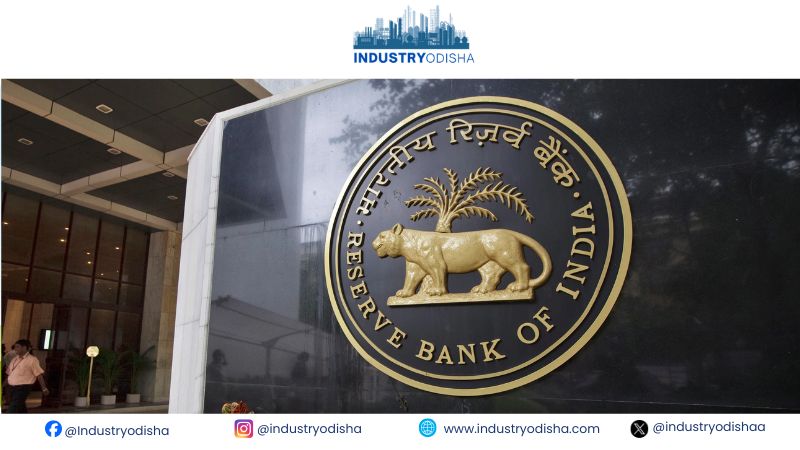
Industry Odisha Bureau, Oct 10: SBI Capital Markets sees the RBI repo rate rising 75–100 basis points this cycle. Persistent inflation drives the outlook, though growth risks are building. Banks may gain, while bond markets wait for relief.
India’s economy is expanding faster than expected. Yet stubborn price pressures are pulling monetary policy the other way.
SBI Capital Markets expects the Reserve Bank of India to keep tightening. Its report projects a cumulative repo rate rise of 75–100 basis points. This is a brokerage forecast, not official RBI guidance.
Gradual increases remain the brokerage’s base case. However, a larger RBI rate hike in December 2026 cannot be ruled out. That depends on inflation readings for September and October.
The RBI Monetary Policy Committee raised the repo rate by 25 basis points. It also shifted its stance from “Neutral” to “Calibrated Tightening”. The report reads both moves as a sharper focus on inflation control.
Inflation sets the timeline
Consumer price inflation, which tracks household costs, may peak in Q3 FY27. Wholesale price inflation could ease from March 2027, aided by favourable base effects.
CPI inflation could slip below 5% year-on-year beyond Q1 FY28. The report sees the policy cycle turning in that quarter as the growth-inflation balance evolves. That is a projection, not a scheduled decision.
Growth gives the RBI room
Real GDP grew 7.8% year-on-year in Q1 FY27. Markets had expected 7.1%. Manufacturing expanded 9.2% during the quarter. Gross fixed capital formation, a gauge of investment activity, rose 11.9%.
That resilience gives the RBI room to tighten. But tightening carries costs.
Consumers feel the squeeze
The brokerage flags consumption risks in the second half of FY27. Rising borrowing costs make financed purchases more expensive for households. Subdued rural sentiment and weaker kharif sowing could also restrain spending. Persistent inflation, meanwhile, erodes purchasing power.
Oil adds another layer of risk. The report warns prolonged geopolitical conflicts could keep costs elevated. A risk scenario of crude around $100 per barrel would add further strain.
Banks gain, credit may cool
Higher rates are expected to support bank margins in the near term. Lending yields can adjust faster than funding costs during tightening. Still, the report expects FY27 to stay favourable for banks. However, non-food credit growth could gradually slow towards the end of FY27.
Bonds await a turn
Benchmark 10-year government bond yields have risen around 70 basis points in 2026. That market move is distinct from repo rate changes. The report expects yields to stay elevated until geopolitical tensions and inflation ease.
Global forces add pressure. Rising yields in advanced economies and emerging-market capital outflows are adding to financial pressures. Still, SBI Capital Markets sees bonds regaining investor interest in FY28.
India’s growth story remains intact for now. Yet inflation could keep monetary policy restrictive for longer. Banks may benefit early, while borrowers and bond investors absorb the strain. The next turn depends on how quickly price pressures ease.
