



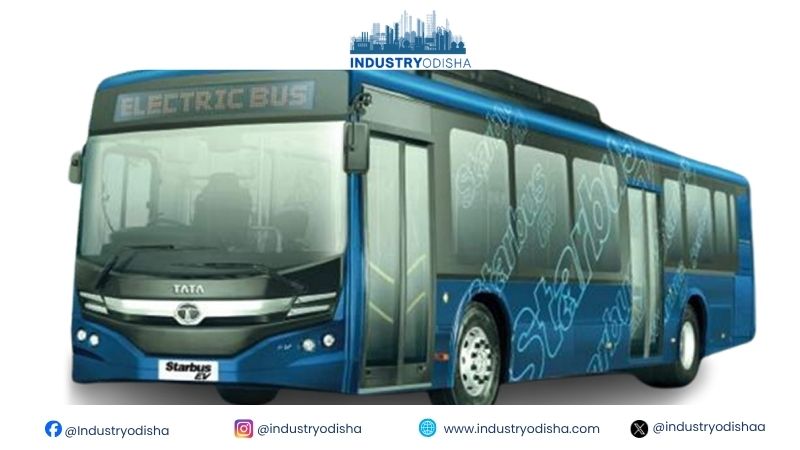
Industry Odisha Bureau, Oct 02: JSW emerged lowest bidder for about 1,200 buses in a 4,054-bus electric bus tender. Bidding was fierce, with gaps near 10%. Legacy makers Tata Motors and Ashok Leyland face fresh competition in government-backed e-buses.
India’s electric bus market is being reshaped by government tenders. The latest one shows how. JSW Group emerged as the lowest bidder for about 1,200 buses, two executives said. They were part of a 4,054-bus mega govt order under PM-eBus Sewa. In doing so, Sajjan Jindal’s group beat Tata Motors and Ashok Leyland. The tender, first planned for 3,604 buses, grew after Haryana’s demand was added.
Fierce Bidding
Pricing was very aggressive, one executive said. Gaps between the lowest and second-lowest bids were around 10% in many cases.
Being lowest bidder is not the same as winning the most buses. PMI secured 1,248 buses and Sai Green Project 1,236. Eka Mobility won 270, and Inventive Software Solutions 100. JSW’s slice still gives it a sizeable foothold in public e-bus procurement. JSW declined to comment; tendering agency CESL did not respond.
From Factory to Fleet
JSW entered the commercial vehicle business through JSW Greentech, set up in 2024. It is a subsidiary of JSW Green Mobility. Its 90-acre plant in Chhatrapati Sambhaji Nagar has capacity for 10,000 buses a year. Capacity is not output, and buses are sold under the Ampstar brand.
Early demand came from within the group. In April, it registered 25 buses for a steel plant. The tender opens a door to public transport beyond its own sites.
A Decade-Long Model
Bus makers do not bid directly in these tenders. Fleet operators do. Winners buy buses from manufacturers and arrange the infrastructure to run them. State transport agencies then pay per kilometre, for 10-12 years.
JSW bid through its own operator, JSW Eco Mobility. So it plans to both build the buses and run them for over a decade. Such buses typically cost ₹1-1.25 crore each; the tender’s value is not known.
Newcomers Gain Ground
Tata Motors and Ashok Leyland have not been major winners in recent tenders. Newer players have filled the gap. Eka Mobility and PMI Electro took about two-thirds of recent e-bus tenders. Those covered more than 20,000 buses over the past year. Tender wins are not overall market share.
CSEP’s Shyamasish Das called JSW’s entry a progression in its EV manufacturing push.
Public Money Drives Scale
Public money underpins this market. PM-eBus Sewa targets smaller cities and towns. It offers operational support of ₹24 per kilometre for 12-metre buses. PM E-DRIVE supports over 14,000 e-buses across nine major cities. Together, the schemes back fleets in more than 100 cities. The aim includes reducing dependence on imported crude oil.
A Growing Market
India sold 5,356 electric buses in FY26, up 37%, VAHAN data show. The International Energy Agency ranks India the third-largest e-bus market by sales. Tendered buses, though, are not yet registered or deployed.
Tenders Redraw the Map
Manufacturing scale alone may no longer decide leadership. Tender pricing, fleet operations and long contracts now matter as much. JSW has made its bid on all three. Delivery will decide whether that bet pays off.
