



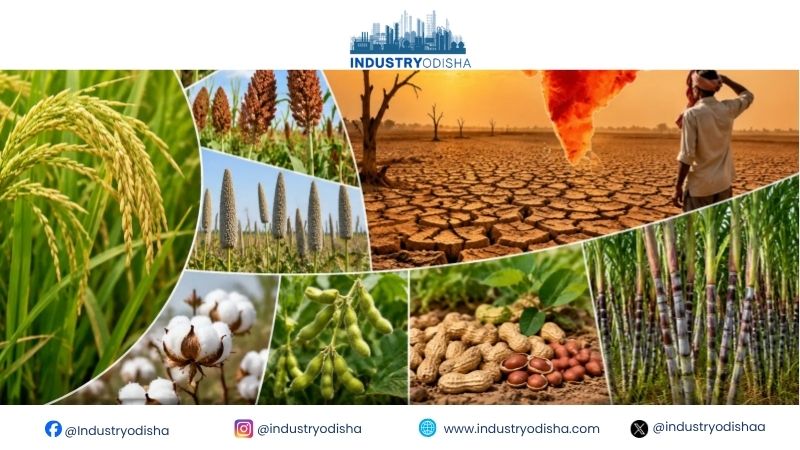
Industry Odisha Bureau, Oct 01: India aims for 373.93 MT of foodgrain in 2026-27, citing El Niño risk. The rabi target is 177.72 MT. Water availability is now shaping crop choices.
India has set a foodgrain production target of 373.93 million tonnes for 2026-27. That is 2.63 MT below the 376.56 MT produced in 2025-26. Last year’s target had been just 362.60 MT. Agriculture Minister Shivraj Singh Chouhan said the new goal was set in view of El Niño. It is a planning objective, not a forecast of actual output.
Rabi Carries the Load
For the upcoming rabi season, the foodgrain target stands at 177.72 MT. Wheat accounts for the largest share. Pulses, coarse cereals and oilseeds follow.
Water Enters the Equation
Production planning now weighs reservoir levels, groundwater availability and soil moisture. Weather conditions are also being considered, Chouhan said. In water-stressed areas, farmers are being encouraged to move away from water-intensive crops. Pulses, oilseeds and millets are the preferred alternatives. For drought-hit farmers facing fallow fields, short-duration, low-water varieties are being arranged.
Monsoon Reshapes Sowing
The monsoon has been uneven. Chouhan said the cumulative rainfall deficit hit 14% around August 24-25. Rain over the next three to four days narrowed it to 12%. He noted a deficit of up to 19% is not classed as severe drought.
Kharif sowing area still fell by only around 1%. Chouhan credited contingency plans by the Centre, states, ICAR and farmers. Rice saw the steepest drop, with acreage down about 16.32 lakh hectares. Maize, soybean and cotton also slipped.
Meanwhile, pulses, oilseeds and millets gained ground. Urad, tur, bajra, jowar, sesame and sunflower all recorded higher acreage.
Damage Still Being Counted
Preliminary reports show about 6.11 lakh hectares affected by heavy rain, floods or drought. The area spans Karnataka, Maharashtra, Tamil Nadu, Telangana, Andhra Pradesh, Rajasthan and Gujarat. A detailed scientific assessment is still under way. Central teams will visit Karnataka and Maharashtra on October 3.
Fertiliser Stocks Ahead of Rabi
States estimate rabi fertiliser needs at around 380 lakh metric tonnes. This covers urea, DAP, NPK and other fertilisers. More than 163 lakh tonnes is currently available, Chouhan said. That compares with about 122 lakh tonnes at last year’s rabi start.
International fertiliser prices have risen sharply. Chouhan said the extra burden would not be passed on to farmers.
Safety Nets Tightened
Procurement rules for pulses and oilseeds are also changing under PM-AASHA. If prices fall below MSP, NAFED and NCCF can buy directly in mandis. They no longer need to wait for state agencies to start. Talks are also under way on possible crop insurance claims under PMFBY.
The State Disaster Response Fund will provide immediate relief. Further aid from the National Disaster Response Fund depends on central assessments.
Planning for Uncertainty
India’s 2026-27 strategy pairs a cautious foodgrain target with weather contingencies. Water availability is steering crop choices in stressed regions. El Niño remains a risk, not a settled outcome. Final production will depend on how the season unfolds.
