



Industry Odisha Bureau, Sep 30: A ₹2,79,157 crore Cabinet package channels ₹1,86,405 crore into PM DHARA. Rabi MSP rises for six crops, with a ₹90,962 crore estimated payout. Delhi gets ₹1,790 crore for technology-led traffic management.
Three Priorities, One Meeting
Wednesday’s Cabinet decisions carry a combined value of ₹2,79,157 crore. The money spans farms, clean energy and city roads. Each strand serves a separate economic priority. Renewable energy claims by far the largest share. Agriculture follows, through a revised Rabi Price Policy. Delhi’s traffic network receives the smallest slice. Union Minister Ashwini Vaishnaw announced the decisions after the meeting.
Clean Energy Takes the Biggest Slice
PM DHARA accounts for ₹1,86,405 crore of the combined figure. That is roughly two-thirds of the entire package. The name stands for Developing Harmonized and Accelerated Renewable Energy Access. The programme aims to widen and speed up access to renewable energy. It sits within a broader expansion of clean-energy infrastructure.
Farmers Get Higher Price Floors
The Rabi Price Policy covers the 2027-28 Rabi Marketing Season. Its estimated payout to farmers is put at ₹90,962 crore. The figure is an official estimate, not a direct cash transfer to growers.
The minimum support price, or MSP, is a government-announced procurement floor. It applies to eligible crops bought under the relevant procurement mechanism. The decision arrives ahead of the Rabi sowing cycle.
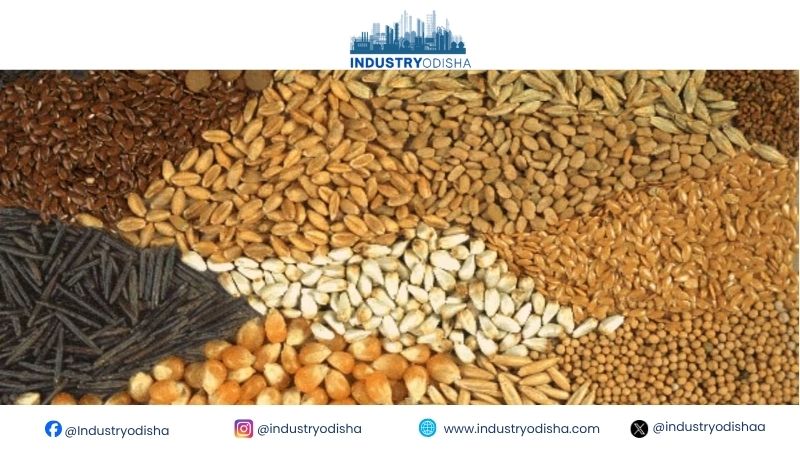
The Rabi MSP hike covers six crops. They are wheat, barley, gram, lentil, rapeseed-mustard and safflower. Wheat MSP for 2027-28 rises to ₹2,610 per quintal, from ₹2,585. Barley moves to ₹2,286 from ₹2,150, while gram rises to ₹5,958 from ₹5,875.
Oilseeds and pulses see bigger increases. Mustard climbs to ₹6,613 from ₹6,200. Masoor rises to ₹7,390, up from ₹7,000. Safflower posts the largest jump, rising to ₹7,215 from ₹6,540.
How the Margins Compare
The government set the rates using projected production costs. Each price also reflects a corresponding margin over cost. Those costs vary widely across the six crops. Wheat is costed at ₹1,264 per quintal, and barley at ₹1,447. Rapeseed-mustard stands at ₹3,367, gram at ₹3,751 and masoor at ₹3,854. Safflower carries the highest cost, at ₹4,810.
Wheat enjoys the widest cushion, with a 106% margin over cost. Rapeseed-mustard follows at 96%, with masoor at 92%. Gram and barley sit at 59% and 58% respectively. Safflower has the narrowest margin, at 50%.
Delhi Adds a Technology Layer
The smallest allocation goes to the national capital. The Cabinet cleared ₹1,790 crore for an Intelligent Traffic Management System. The ITMS will cover the National Capital Territory of Delhi. It is expected to rely on technology-based traffic-management tools. The stated aim is better monitoring and management of traffic movement. The programme is separate from PM DHARA and the farm pricing decision.
Three Objectives, One Package
Taken together, the decisions pursue three distinct goals. The Rabi MSP framework provides crop-price support for six notified crops. PM DHARA targets wider renewable-energy access. Delhi’s ITMS addresses urban traffic management.
The split is uneven. PM DHARA’s ₹1,86,405 crore dwarfs the other two combined. The farm payout estimate of ₹90,962 crore forms most of the remainder. Delhi’s ₹1,790 crore accounts for well under 1% of the total.
The ₹2.79 lakh crore package therefore rests on three unequal pillars. Roughly two-thirds goes to energy, a third to farms, a sliver to Delhi.
