



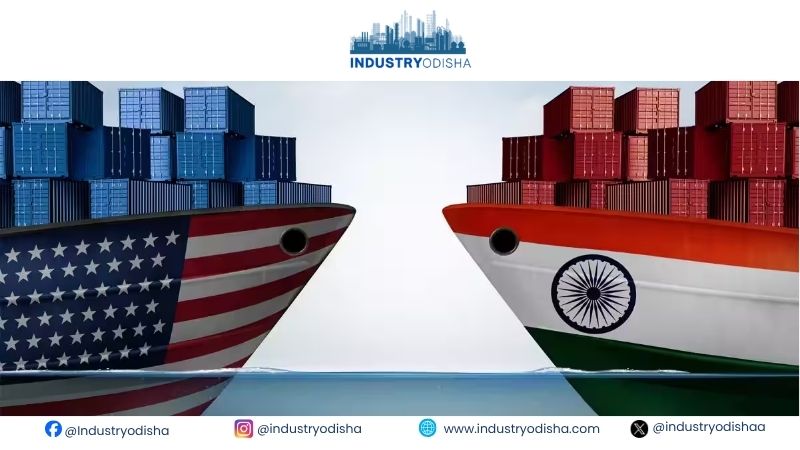
Industry Odisha Bureau, Sep 19: US tariffs on Indian goods have changed repeatedly since April 2025. The timeline shows rising uncertainty for exporters and trade planners. Policy changes have affected pricing, contracts and market access.
April 2025: Tariff Cycle Begins
The US announced broad additional tariffs on several trading partners. Indian goods initially faced a 26% additional tariff structure. Part of that tariff burden was later temporarily suspended. However, exporters continued facing additional US duties.
August 2025: Tariffs Rise Sharply
The US later increased tariffs on Indian goods. A separate Russia related tariff further raised the burden. Combined additional tariffs reached 50% for many products. That significantly weakened price competitiveness in the US market.
February 2026: Relief Emerges
India and the US announced a bilateral trade framework. Washington proposed reducing reciprocal tariffs on Indian goods. However, the proposed 18% tariff never became operational. A separate Russia linked tariff was later withdrawn.
July 2026: New Tariff Framework
The US introduced a new Section 301 tariff mechanism. Indian goods faced an additional 10% tariff. MFN duties continued alongside the new levy. That kept exporters exposed to higher overall costs.
September 2026: New Risk Appears
President Donald Trump signed new Russia Iran sanctions legislation. The law allows tariffs targeting major Russian energy buyers. India and China could face additional trade exposure. However, maximum tariffs are not automatically imposed. Implementation depends on future US decisions.
Current Position
The current tariff timeline remains complex for Indian exporters. Indian goods face varying duties depending on product category. Sectoral tariffs also apply to selected industries. Actual exposure therefore differs across export segments.
Exporters Face Policy Volatility
The key challenge is repeated tariff policy change. US tariffs now carry both economic and geopolitical objectives. That complicates long term planning for Indian goods exporters. Companies must increasingly diversify markets and supply chains.
Timeline Signals Structural Shift
The timeline shows a broader transformation in US trade policy. Tariffs are becoming a strategic policy tool. For Indian goods, uncertainty now extends beyond normal market conditions. Future competitiveness will depend partly on navigating this changing tariff environment.
