



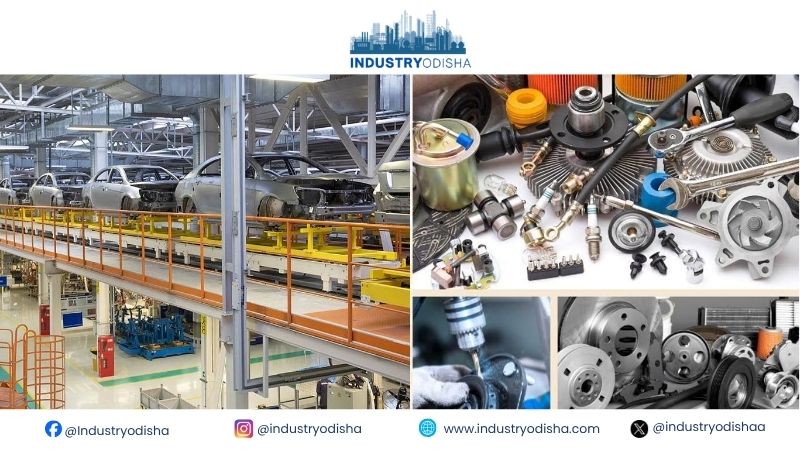
Industry Odisha Bureau, Sep 17: India’s auto component industry is gaining from a major global sourcing shift. Auto major companies are increasingly reducing dependence on single-country supply chains. That change is reshaping Parts Supply strategies across the automotive industry. Indian suppliers are expanding manufacturing footprints and engineering capabilities to capture demand. Trade uncertainty and tariff volatility are accelerating this global transition.
Auto Majors Redraw Sourcing Networks
Global auto major companies now want greater flexibility from tier-one suppliers. They increasingly prefer suppliers operating across several manufacturing locations. Products can be designed centrally and produced across multiple countries. That reduces disruption risks and improves sourcing flexibility. It also allows quicker responses to tariff changes. Indian suppliers are positioning themselves strongly within this model.
Parts Supply Becomes More Global
Parts Supply is no longer defined only by manufacturing costs. Geographical diversification is becoming equally important. Suppliers must now support customers across different production regions. Suprajit Engineering already operates plants across several countries. Its footprint includes India, China, Mexico, Hungary, and Morocco. Such diversification allows customers to shift volumes between locations.
China+1 Creates Fresh Opportunity
The China+1 strategy continues reshaping global automotive sourcing. Automakers are widening supplier networks beyond traditional Chinese production hubs. This creates a larger opportunity for India’s auto component industry. India currently controls below 5% of global component trade. China holds a significantly larger share near 12%. However, Indian companies are rapidly improving technology and quality.
Export Potential Expands
India’s auto component exports could rise significantly this decade. Exports are projected near $24 billion during FY26. They could reach around $45 billion by FY30. That expansion would strengthen India’s position in global Parts Supply. Better engineering capabilities are supporting this export opportunity. Cost competitiveness remains important, but technology now matters equally.
Engineering Drives Sourcing Decisions
Global sourcing strategies increasingly depend on engineering expertise. Auto major companies expect suppliers to handle more product development. That trend is changing the traditional build-to-print model. Indian manufacturers are moving towards proprietary products and sub-assemblies. This allows suppliers to capture greater value. It also deepens long-term relationships with global automakers.
Technology Gap Narrows
Indian component quality is approaching international benchmarks. Technology improvements have strengthened competitiveness against European suppliers. This is attracting greater interest from overseas automakers. European companies are also diversifying sourcing away from China. Indian suppliers are benefiting from that realignment. The opportunity now extends beyond low-cost production.
Powertrain Diversification Gains Pace
The auto component industry is also adapting to new powertrains. Suppliers are expanding across hybrid, electric, hydrogen, and CNG platforms. This reduces dependence on internal combustion engine business. It also prepares companies for changing vehicle technologies. Multi-powertrain capabilities improve resilience across global sourcing cycles.
Sub-Assemblies Increase Value Capture
Indian suppliers are taking on larger manufacturing responsibilities. Sub-assemblies are becoming an important growth area. They allow suppliers to provide more complete solutions. This supports stronger margins and deeper customer integration. It also reduces sourcing complexity for auto major companies.
Global Footprints Become Competitive Advantage
Multi-country manufacturing is becoming a strategic differentiator. Suppliers can manage tariffs without losing customer relationships. They can also respond faster to regional supply disruptions. That makes global footprints increasingly valuable. Indian companies are investing accordingly. The result is a more resilient Parts Supply ecosystem.
Auto Component Industry Moves Up Value Chain
India’s auto component industry is no longer competing only on cost. Engineering, design, scale, and flexibility are becoming central advantages. Global sourcing changes are accelerating that evolution. Auto major companies want suppliers with broader capabilities. Indian manufacturers are increasingly able to meet those requirements. The shift could strengthen exports throughout the decade. It could also deepen India’s role in global automotive supply chains. For Indian Parts Supply companies, the opportunity is becoming increasingly strategic.
