



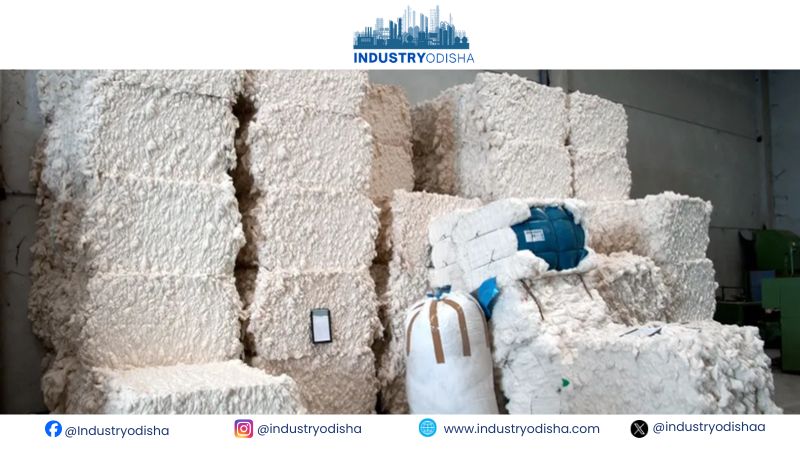
Industry Odisha Bureau, Sep 14: India’s textile industry wants duty-free cotton imports extended beyond October 31. Cotton and yarn prices have both risen sharply this year. Farmers worry the move could pressure prices during the harvest.
India’s textile industry has sought a six-month extension of duty-free cotton imports. The current exemption runs through October 31. The government had waived the 11% import duty from June. The move aimed to boost cotton availability and steady domestic prices.
Textile Industry Seeks Duty-Free Cotton Extension
Cotton prices have risen roughly 20% during 2026. They climbed about 24% over the past six months alone. Cotton yarn prices have increased even faster, industry representatives say. Apparel exporters argue this is squeezing their margins.
Cotton Yarn Prices Squeeze Apparel Exporters
Yarn accounts for roughly 60% of garment raw-material costs, according to industry estimates. Tiruppur Exporters Association president KM Subramanian said cotton yarn prices jumped 60% in 2026. He said this adds to the challenges facing apparel exporters. He also cited concerns over yarn availability. Tiruppur remains a major hub for India’s knitted-garment exports.
India’s Cotton Production Keeps Falling
India’s cotton production fell 2.35% to 290 lakh bales in 2025-26. Each bale weighs 170 kg. Production has now declined for six consecutive years. Output has contracted more than 17% since 2021-22. Falling supply can tighten competition among spinning mills. That pressure can transmit through to yarn and garment costs.
Cotton Farmers Fear Harvest-Season Pressure
Farmers worry an extended import window could overlap with fresh crop arrivals. Domestic cotton arrivals typically pick up from October. Additional imported supply during that period could weigh on prices. Farmers are already contending with higher fertiliser and seed costs. Their concern centres squarely on timing, not on cotton imports generally.
Global Prices Could Limit Import Advantage
Pradip Jain, president of the Khandesh Ginning and Pressing Association, offered a different view. He said prevailing international cotton prices may limit any import discount. He suggested domestic prices may hold near ₹9,000 per quintal. Removing the duty lowers only one part of imported cotton’s landed cost. Freight, currency and global prices still factor into the final cost.
Weather Adds Supply Uncertainty
Rainfall conditions have raised concerns in key cotton-growing regions. These include Vidarbha, Marathwada, Telangana and parts of Gujarat. Weather remains another variable shaping this season’s cotton supply.
Textile Export Ambitions Raise Stakes
Indian textile and garment exporters are also eyeing the India-UK Free Trade Agreement. Competitive raw-material costs matter for exporters chasing new overseas markets. Higher yarn costs could complicate that push at a sensitive time.
The government now faces a familiar trade-off. Extending duty-free imports could ease pressure on textile manufacturers. It could also unsettle cotton farmers just as the harvest begins.
