



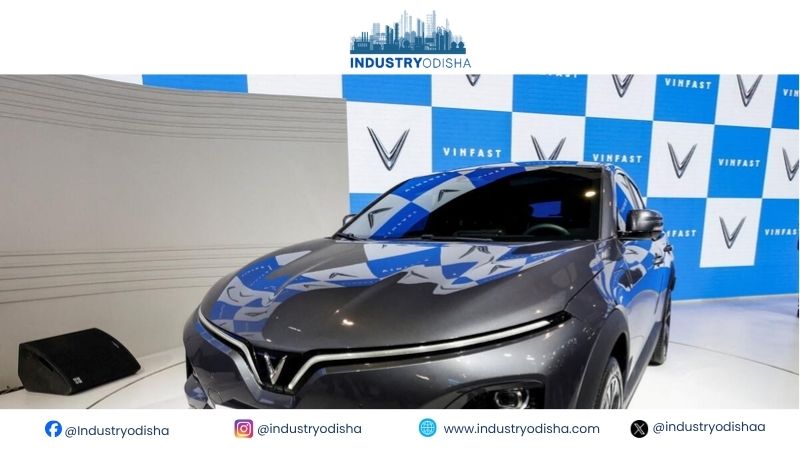
Industry Odisha Bureau, Sep10: VinFast is developing two electric vehicles built specifically for India. Sources say they carry internal codenames VF X and VF Y. The plans follow a major strategic reversal weeks earlier. Discussions with Indian suppliers remain at an early stage.
This marks a departure from VinFast’s previous localisation approach. The company had tried adapting existing global vehicles for India. That strategy proved difficult to sustain on cost grounds. VinFast now wants products built around Indian requirements directly.
In July, VinFast paused local manufacturing plans for three models. Those were the VF 3, VF 6 and VF 7. Sources said targeted price points proved difficult to achieve. Importantly, this pause doesn’t affect Indian sales entirely.
VinFast continues selling VF 6 and VF 7 in India. Both arrive as kits imported from Vietnam directly. Assembly still happens at VinFast’s Indian manufacturing facility. Only local manufacturing plans for these models were suspended.
Supplier involvement now begins much earlier in development. VinFast executives met roughly 200 Indian suppliers in August. The goal is avoiding previous cost-related complications entirely. Early collaboration helps align components, tooling and pricing sooner.
VF X represents VinFast’s proposed entry-level offering for India. Sources say the company targets pricing below $12,000. That figure remains a target, not a confirmed price. It roughly matches VF 3 pricing within Vietnam’s market.
Design work on VF X continues, according to sources. The vehicle should sit between VinFast’s existing size options. It would be larger than the two-door VF 3. Yet smaller than the current VF 6 crossover.
Balancing interior space against manufacturing cost remains challenging. Indian consumers generally prefer relatively spacious vehicle interiors. VinFast is still refining this size-cost equation carefully.
For context, VF 6 currently starts near $19,000 in India. VF 7 begins at approximately $24,250 for buyers. A sub-$12,000 VF X would target a different segment entirely.
That segment carries significant competitive weight already. Tata Motors maintains a strong presence in affordable EVs. Entering this space would test VinFast’s cost discipline directly.
India’s EV market continues expanding at a notable pace. Electric vehicles now exceed 7% of total car sales. Government policy aims for 30% EV penetration by 2030. That figure remains a stated objective, not a guaranteed outcome.
VinFast has pledged $2 billion toward its India operations. Its factory outside Vietnam opened there last year. Initial capacity stands at 50,000 vehicles annually. That capacity is scalable to 150,000, pending expansion approval.
VinFast has sold roughly 10,000 vehicles since September 2025. The company declined to comment on unreleased product plans. It said announcements would come at an appropriate time.
Whether India-specific design can deliver true affordability remains unproven. VinFast’s revised approach improves alignment with local market needs. Converting that alignment into competitive pricing is the real test ahead.
