



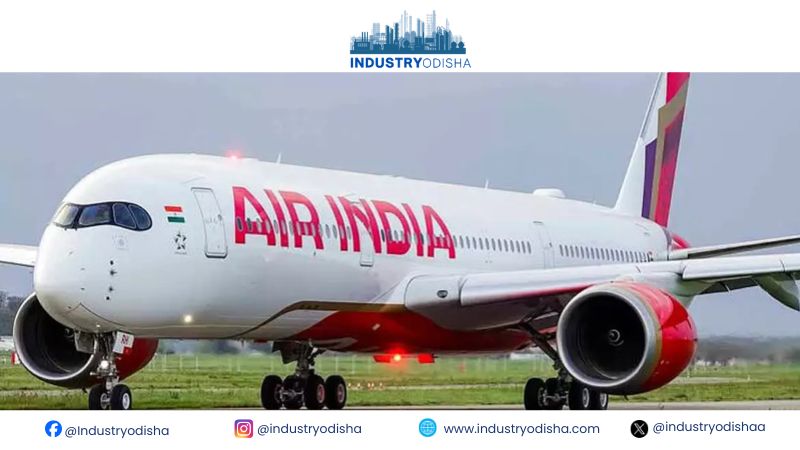
Industry Odisha Bureau, Sep 09: A technical fault at NATS disrupted UK air traffic on Tuesday. Air India was among the airlines affected by the disruption. The carrier diverted, delayed and cancelled several UK-linked flights. The disruption affected UK aviation operations widely that day.
NATS manages air traffic control across British airspace. It also operates control services at major UK airports. The technical problem disrupted departures from several airports nationwide. Wider delays soon spread across parts of European aviation.
Air India said the disruption forced multiple operational changes. Flights were diverted, delayed or cancelled because of the fault. The airline said other flights could also face disruption. Aircraft and crews were left out of position afterward. Such measures aimed to limit passenger inconvenience nationwide.
Air India flight AI 131 was flying Mumbai to London. The aircraft carried more than 290 passengers onboard. It was diverted while approaching London Heathrow airport.
AI 131 landed instead at Zurich Airport in Switzerland. Passengers initially remained onboard as Heathrow conditions were assessed. Crews expected the flight could later continue to Heathrow.
The flight was subsequently cancelled after further assessment. All passengers then deboarded at Zurich Airport. Air India said it regretted the resulting inconvenience.
London Heathrow said departing flights faced disruption that day. Arriving flights were not affected at that stage. Heathrow advised passengers to contact their airlines directly. The airport said conditions were being closely monitored throughout.
Disruption also reached Gatwick, Manchester and Stansted airports. Each airport worked with local NATS teams on recovery. Officials focused on restoring normal operations and passenger updates.
Flightradar24 reported more than 1,000 flight cancellations that Tuesday. That figure covered UK aviation broadly, not just Air India. The figure included flights from multiple airlines and airports. Air India’s own cancellations were not separately specified.
Other carriers were also affected by the technical fault. British Airways, EasyJet, KLM and Lufthansa reported disruptions too. EasyJet said some flights could not operate that day. The fault also contributed to delays across Europe.
Airline networks depend on aircraft reaching planned locations. Crews also must be positioned for upcoming scheduled flights. Diversions and cancellations can displace both aircraft and crews. Such challenges can persist even after systems are restored. That displacement can complicate flights well beyond Tuesday.
Restoring air traffic control does not instantly fix schedules. Airlines still must reposition aircraft across their wider networks. Crew scheduling adds another layer of operational complexity. Passengers may experience knock-on effects for several days. Such recovery work often extends beyond the original fault.
Air India asked passengers to verify status before travelling. The airline said it was monitoring the situation closely. Restoring normal operations may still take further time. Full recovery depends on aircraft and crew alignment resuming. The bigger task lies in repositioning displaced aircraft and crews.
