



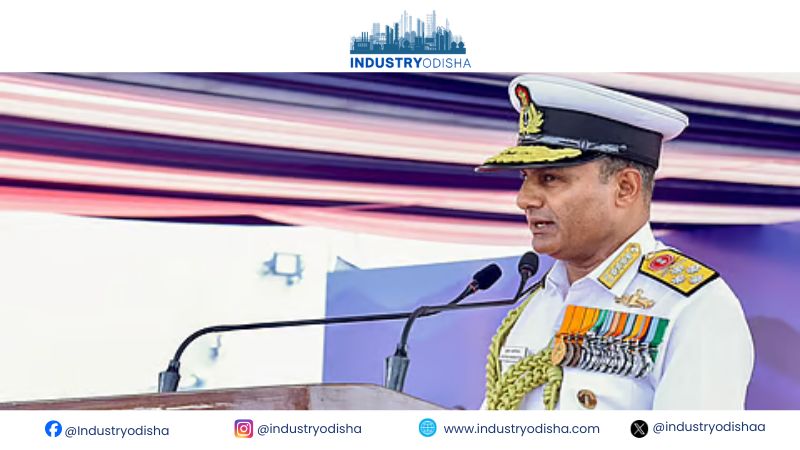
Industry Odisha Bureau, Sep 06: India’s three military Services face increasingly integrated forms of warfare. Navy Chief Admiral Krishna Swaminathan stressed greater jointness recently. Future conflicts will require combined Service capabilities, he said. Technology is making warfare faster and more precise. Joint operations are therefore becoming increasingly important going forward.
Swaminathan addressed newly commissioned Army officers at a formal ceremony. He served as Reviewing Officer at Chennai’s Officers Training Academy. His message centered on cooperation across the Army, Navy and Air Force. Tomorrow’s wars, he said, demand combined strength across all domains.
Quoting the Rig Veda, he invoked “Samano Mantrah” — our purpose is one. Regardless of uniform color, he said, personnel must unite. Services must train together, operate together, and ultimately prevail together. This message reflects growing emphasis on tri-service integration nationally.
Swaminathan traced dramatic changes since he joined the Navy in 1987. Modern warfare now involves far greater range and precision. Sensors detect targets with unprecedented clarity and depth today. Operations increasingly unfold simultaneously across multiple domains at once. Combat now relies on remarkably sophisticated and versatile technologies.
These shifts underscore why interoperability matters more than ever. Modern battlefield effectiveness increasingly depends on connecting sensors and decisions. Information must flow rapidly between different Service branches. Coordinated planning and shared objectives reduce operational friction significantly. Joint training helps personnel understand different Service capabilities directly.
Training together can build essential understanding of communication needs. It exposes officers to varied operational procedures and command relationships. Such training does not guarantee victory, but supports coordination. Technology’s growing sophistication continues transforming how forces detect and respond.
Yet Swaminathan offered an important caveat about warfare’s core nature. The character of warfare has changed considerably over decades. However, he insisted war remains fundamentally a human endeavor. Outcomes still depend on people who fight, lead and persevere. Technology increases speed and precision, but cannot replace judgment.
Swaminathan delivered a pointed message about leadership and trust. Rank grants authority, he told the officers directly. Character, however, builds credibility among those being led. Only genuine leadership earns lasting loyalty from subordinates. He urged officers never to confuse these three distinct concepts.
He described how soldiers ultimately judge their commanders. Troops ask whether officers will stand by them under pressure. They wonder if leaders will take responsibility during difficult moments. Trust, he suggested, matters more than any formal recognition. Such answers define officers more than promotions or accolades.
The ceremony commissioned 313 male and 29 female Indian cadets. Seventeen foreign cadets also completed training successfully at OTA. They represented Seychelles, Tanzania, Uganda, Zimbabwe, Eswatini, Bhutan and Lesotho. This international training reflects broader professional military connections.
Ultimately, India’s future military effectiveness depends on two elements. Integrated Services must operate seamlessly across expanding domains. Equally vital, leaders must earn genuine trust through character and conduct.
