



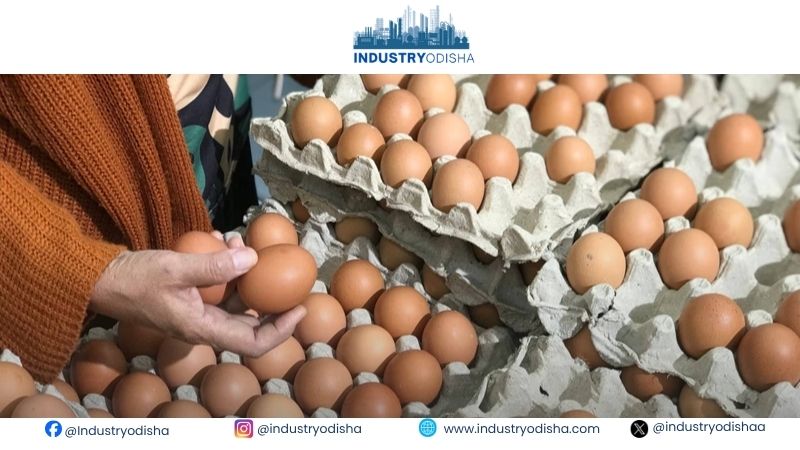
Industry Odisha Bureau, Sep 01: India’s egg prices have climbed sharply over the past twelve months, squeezing household budgets nationwide. Prices have risen roughly 35 to 40 percent during this period, industry data shows. Farm-level rates now hover near seven rupees per egg across most regions. Retail prices vary considerably across markets, while some delivery apps show even higher figures.
Maize remains a critical energy source within India’s poultry feed formulations nationwide. Under the Ethanol Blended Petrol programme, distillers increasingly compete for available maize supplies. This growing competition has tightened maize availability for poultry producers across the country.
Government data reveal the scale of this shift toward ethanol-based maize consumption. About 125.75 lakh tonnes of maize went toward ethanol during ESY 2024-25. Maize-based distilleries received roughly 477.8 crore litres of ethanol allocation that year. Maize use for ethanol jumped from 8.3 lakh tonnes within just two years. That represents an increase exceeding fifteen times across a remarkably short period. For ESY 2025-26, around 125.78 lakh tonnes have been allocated for similar use. Actual utilisation, however, can differ meaningfully from these official allocation figures each year. Officials have not signalled any immediate changes to ethanol-linked maize allocation policies.
Higher maize demand gradually pushes up poultry-feed costs for farmers across India. Rising feed costs, in turn, can raise overall egg-production expenses quite significantly. Farmers then absorb some costs or pass them along the supply chain. Maize is not the sole driver, but it remains an important factor.
Winter typically strengthens egg demand across households, hotels and restaurants across India. Institutional buyers also tend to increase orders as colder months approach each year. If feed costs stay elevated, this seasonal demand could push prices higher.
Eggs have long served as an affordable protein source for many households. Rising prices could particularly strain families relying heavily on eggs for nutrition.
India’s expanding maize production could eventually help ease this growing imbalance somewhat. Output would need to grow fast enough to satisfy every competing demand. The core issue is not maize scarcity but intensifying competing demand pressures. Food, feed and fuel now compete intensely for every available maize tonne. Sufficient supply growth could gradually help moderate this ongoing three-way market competition. Winter demand and continued ethanol requirements will keep these markets closely watched. The coming months will reveal whether supply growth can match this demand.
