



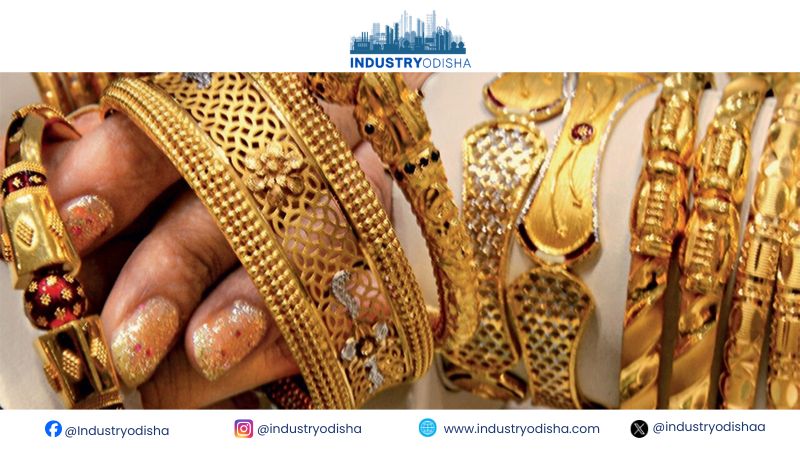
Industry odisha Bureau, Aug 24: India’s organised jewellers are expanding cash-for-gold programmes amid elevated gold prices. High prices constrain fresh jewellery demand and pressure retailer margins substantially. Kalyan Jewellers, Titan, and Joyalukas have launched or expanded cash-for-gold since June. The programmes allow customers to exchange old jewellery for immediate cash payments. This differs from traditional exchange schemes where old gold buys new jewellery.
Organised retailers are entering a market historically dominated by smaller regional players. The strategy reflects efforts to access India’s substantial pool of household-held gold. Kalyan said its cash-for-gold share rose to double digits from single. The company expects this business to be margin-accretive compared with exchange schemes. Kalyan buys recycled gold at discounts to prevailing spot market prices.
Kalyan’s recycled gold represented forty-six percent of India business in June. The share rose significantly from thirty-one percent during the March quarter. Kalyan also reduced promotional offers on its traditional exchange programme substantially. The company shifted strategic focus toward cash-for-gold and recycled gold sourcing. However, Titan reported that customer traction for cash-for-gold remained limited so.
Gold prices have risen sharply this year, creating consumer hesitation measurably. Twenty-four-carat gold reached ₹1,60,480 per ten grams on twenty-first August. The figure compares with approximately ₹1,35,000 per ten grams on first. The sharp increase makes consumers more cautious on discretionary jewellery purchases. This elevated price environment has already pressured organised jeweller profitability substantially.
Kalyan’s EBITDA fell fourteen percent sequentially during the June quarter. The company’s EBITDA margin contracted one hundred basis points to six. Higher prices have created sales-value support despite declining jewellery physical volumes. Larger organised retailers are likely to implement tighter purity checks rigorously. This represents a significant shift from traditionally fragmented regional cash-for-gold operations.
The approaching festive and wedding season offers potential demand recovery opportunity. Industry participants remain cautiously optimistic about improved jewellery demand going forward. Jefferies analysts estimate weddings contribute approximately sixty percent of gold purchases. The third quarter is traditionally the strongest period for jewellery sales. Senior executives expect demand to accelerate once the third quarter begins.
However, elevated prices are likely to constrain physical volumes significantly going. Crisil Ratings expects cash-for-gold to gradually increase over the medium term. Consumer behaviour remains complicated as high prices create conflicting purchase incentives. Some consumers may buy if prices rise further due to momentum. Others may delay purchases expecting prices to moderate at some point.
For organised jewellers, the shift toward recycled gold reflects strategic positioning. Cash-for-gold programmes create revenue opportunities without requiring fresh gold purchases immediately. The programmes tap India’s accumulated household gold holdings more systematically. Yet success depends on consumer adoption and pricing competitiveness remaining viable. The festive season will test whether organised retail can capture opportunities.
