


In a major culinary push to promote the state through its rich and cultural heritage, government of Odisha has launched an initiative to promote authentic Odia cuisine across the country.
The plan, a part of Odisha’s tourism policy, which was recently amended in alignment with the state’s Vision 2036 plan, is a policy move to place tourism as a catalyst for sustainability, cultural pride and global competitiveness.
Odisha Tourism has offered incentives such as capital expenditures up to Rs 5 crore and operational expenditure for three years to draw private investors to set up such restaurants.
Officials familiar with the decision said that the idea is to popularise traditional Odia dishes and their stories that connect generations. Five metro cities, Mumbai, Delhi, Bengaluru, Chennai and Kolkata have been roped in as part of the phase-I plan. Restaurants are also being planned in five major tourist destinations — Agra, Varanasi, Goa, Kochi, and Jaipur, subject to a maximum of two units per destination, they added.
The move to promote Odia food comes at a time when the state is already pushing its signature dishes like pakhala bhata, dalma, chenapodo, rasagulla, etc as global culinary dishes. Celebration of Pakhala Diwas on March 20 is a step in that direction.
Besides, it comes at a crucial moment when the state’s tourism story shows growth in numbers. According to official records, the state received nearly 1.1 crore domestic tourists in 2024, up from about 97 lakhs in 2023—a healthy rise of over 13%. Foreign tourist arrivals have also nearly doubled, reaching 87,854 in 2024.
But then, Odisha still accounts for just 0.42% of India’s total foreign tourists and remains as one of the most unrepresented in the national and global imagination.
That’s not all, despite the rise in number of visitors, the state’s tourism earnings fell by nearly 28% in 2024 (₹9,870 crore to ₹7,140 crore). In other words, Odisha is attracting tourists but not extracting enough economic value per visitor.
Globally, food tourism is one of the fastest-growing segments. According to World Bank estimates, tourism contributes around 8.8% to global GDP, with culinary experiences playing a major role.
In India, states that have successfully “exported” their cuisine have also successfully increased tourism visibility. Cases in point are Punjab, Tamil Nadu, Andhra Pradesh, Gujarat and West Bengal. While Punjabi cuisine has dominated North Indian restaurant markets, reinforcing its cultural identity nationwide, Gujarati thali or South Indian dishes such dosa, idli, etc, have not only given an identity to these states but have also generated employment by creating a chain in hospitality sector both in the country and outside.
Therefore, under these circumstances, analysts are of the view that Odia cuisine, which according to many, including Michelin chefs like Vikash Khanna, is the most underrated food, can act not only as a strategic tool for branding Odisha in line with its vision of Viksit Odisha 2036 but can also promote economic tourism. Promoting authentic Odia restaurants in cities like Delhi, Mumbai, Bengaluru, Kolkata, and Hyderabad can have multiple economic impacts.
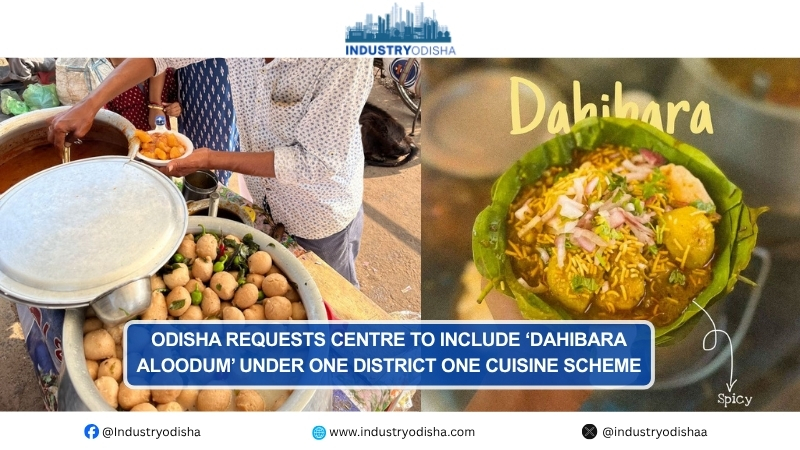
In other words, if people outside Odisha become familiar with dishes like dalma, pakhala, chhena poda, and mahaprasad, dahibara aloodum, etc, they are more likely to visit Odisha to experience the cuisine in its original cultural setting, especially in places like Puri, Bhubaneswar, and Cuttack. Moreover, it will also attract Odia diaspora to visit these restaurants frequently as they miss authentic Odia food outside their state.
Secondly, it will generate employment for Odia youth outside the state by creating an Odia culinary workforce, as restaurants will require chefs, helpers, managers and supply coordinators.
Thirdly, it will promote authentic products of Odisha outside its territory creating a unique supply chain from the state. For example, the demand of Odia products such as Odisha-specific spices, jaggery, dry fish, specific varieties of lentil, temple-related ingredients will increase, which in turn will boost the local supply and help farmers, fishermen and small food processors. The local products can be showcased at restaurants and can be used for export purposes, thereby boosting the state’s economy.
Most importantly, it will build the Odisha brand. It has been observed that a cuisine becomes a brand when it becomes popular among foodies. For instance, when we talk of Chole Bhature, Dhokla or Dosa, we immediately relate it to places like Delhi, Gujarat or South India. Unfortunately, Odisha still lacks that strong food identity in the national market. Restaurants with authentic Odia food can change that faster than tourism advertisements and act as permanent cultural embassies.
While mines built industrial Odisha and temples built spiritual Odisha, it’s time the state’s cuisine showcased the commercial side through its restaurants outside its own den by making way to tourists’ heart through its food!
Also Read ; – Odisha recorded moderate growth of 11.4% in FY 2024-25: CAG
