


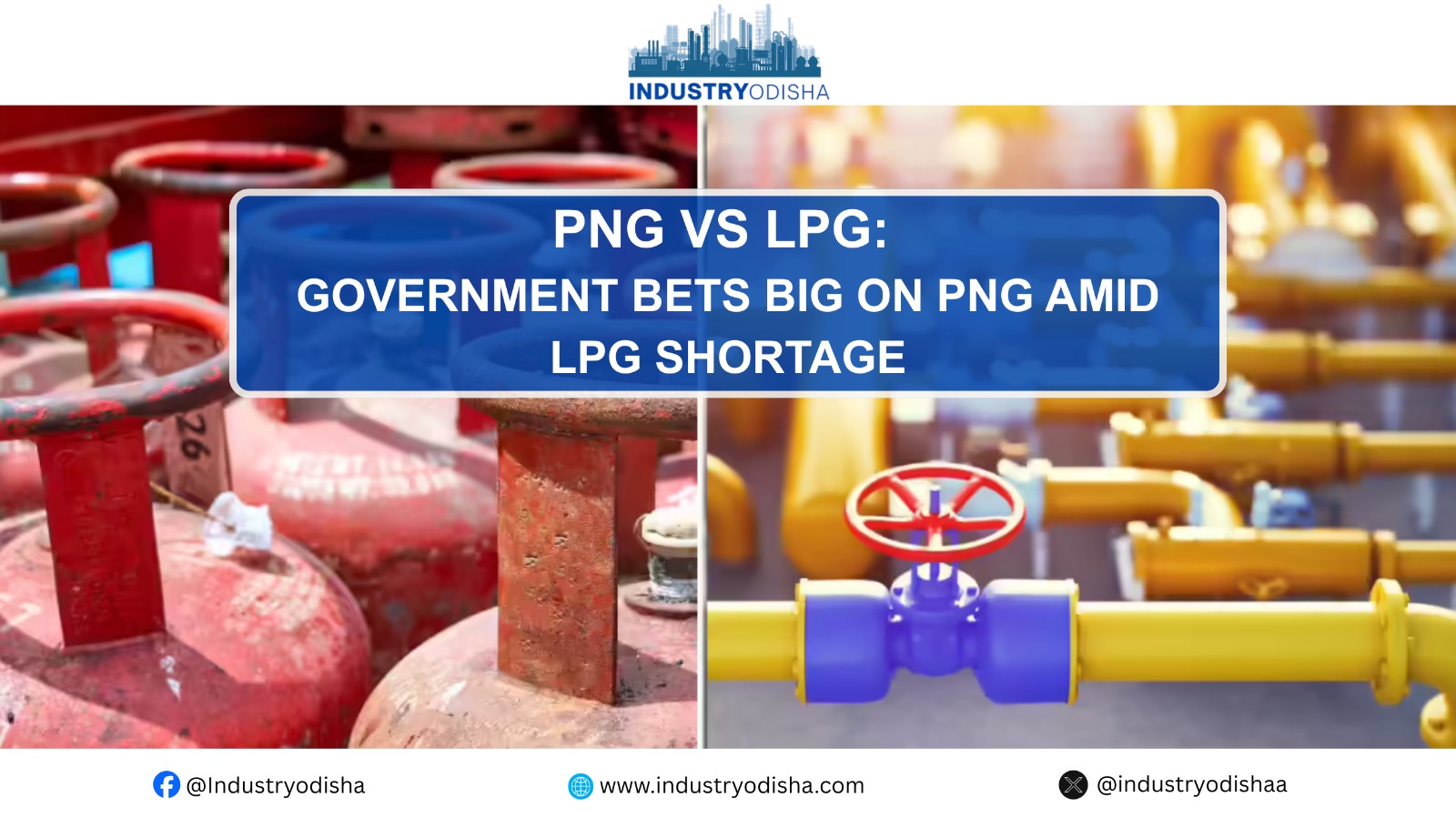
The Central Government on Sunday informed said that about 6,000 piped gas consumers have surrendered their LPG connections in the last three days, while 2.9 lakh new PNG connections have been activated this month. The news comes as a relief and ease pressure on cylinder stocks amid disruption of energy supplies due to the West Asia conflict.
The move follows Centre’s direction to all ministries to assess the potential demand for piped natural gas (PNG) across canteens and pantries at govt departments and offices, and pushes for its expansion. It had also urged govt establishments, residential colonies and canteens to switch to PNG.
Government has made piped gas connections mandatory in areas with a network and said LPG supply will be discontinued after three months. It has also launched a portal where PNG users can express their interest in giving up LPG. LPG cylinders will be picked up from houses and security deposit refunded by the distributor, it added.
It said though the LPG supply has been affected due to the geopolitical situation, delivery of domestic LPG cylinders is normal, with 55 lakh refills distributed on Saturday.
So, what’s the difference between LPG and PNG gas? And why is the government pushing for it?
PNG vs LPG: The Difference
Pipeline gas, or Piped Natural Gas (PNG), primarily natural gas (mostly methane) is delivered directly to homes through underground pipelines.
LPG or Liquefied Petroleum Gas, on the other hand, composed of propane and butane, is supplied in liquefied form in cylinders.
While the PNG is extracted naturally from gas fields and transported into India in liquified form as liquified natural gas (LNG), LPG is produced in oil refineries from crude oil.
Moreover, PNG flows continuously. It doesn’t require refilling and is supplied at low pressure via city gas networks.
Why is the government pushing for it
According to analysts, the government’s aggressive push for PNG in cities across the country is not merely due to the ongoing crisis in West Asia but also an economic, environmental and geopolitical strategy rolled into one.
Firstly, switching over to PNG will reduce New Delhi’s dependency on Middle East and other countries for crude oil. More importantly, the disruptions in supply chain due to geopolitical situations will be negligible as they are produced in the country such as in gas fields like the Krishna-Godavari (KG) basin, Assam, and Tripura. Three fields in the KG basin, namely R Cluster, Satellites Cluster, and MJ, accounted for nearly 25 per cent of India’s total net production of 36 bcm in 2024.
Besides, since the supply of PNG draws from a mix of domestic gas production and imported liquefied natural gas, it will not be affected by any disruptions due to geopolitical tensions, like the war in West Asia and the choking of Strait of Hormuz, disrupting supply of oil tankers.
Secondly, the import bills will come down. Presently, New Delhi imports nearly 85% of its crude oil requirement, making the country extremely vulnerable to global oil price shocks. A crisis in West Asia surges the import bill of India, putting the rupee under pressure. It increases inflation.
Moreover, as LPG cylinders are heavily dependent on global oil prices, they require significant government subsidy and logistics — transporting cylinders, storing them, and distributing them across millions of households. PNG, on the other hand, moves through pipelines and reduces transportation and storage costs significantly. It also reduces the government’s subsidy burden over time as PNG operates on a metered, monthly billing system like electricity.
Thirdly, the push is being done by keeping an energy strategy in mind for the future. As India eyes to increase the share of natural gas in its energy mix from around 6% to 15% in the coming years, which is being driven by institutions and companies like GAIL and Indraprastha Gas Limited by expanding pipeline networks across urban India, a higher share of gas in the energy mix will help the country to diversify its energy sources and reduce overdependence on crude oil.
Lastly, PNG will enable transparency by bringing households into a formal billing system like water and electricity. LPG cylinders often involve subsidy transfers, black market diversion, and administrative complexity. On the other hand, PNG will create a transparent, metered consumption system, which in turn will improve revenue collection and reduce leakages.
In the coming decade, the government wants urban India to move from a subsidy energy system to a network energy system. It will reflect a structural shift in how India powers its cities and manages its economy.
Also Read :- Cyber fraudsters loot Rs 972 Cr from people of Odisha since June 2024
