


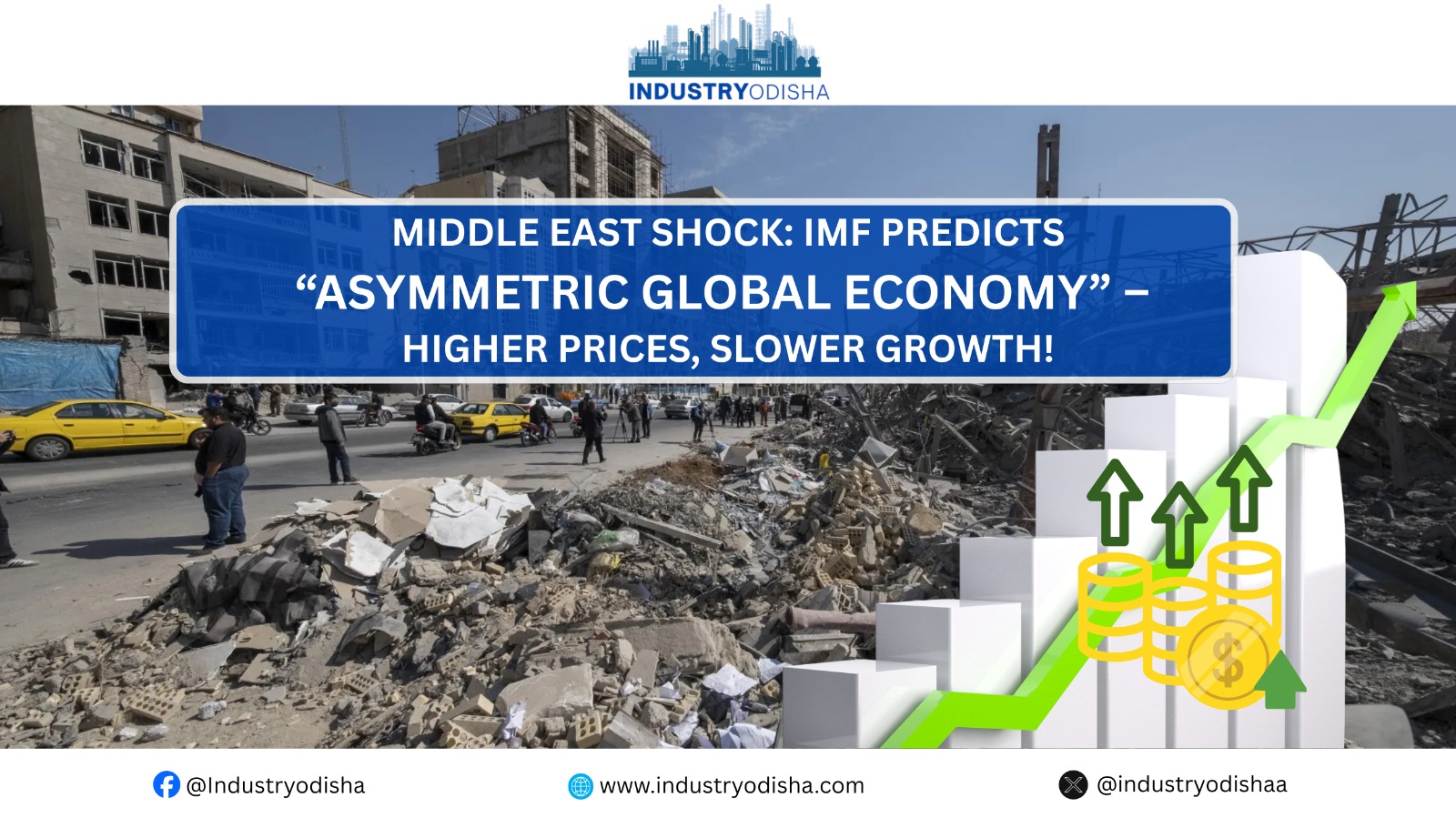
Industry Odisha Bureau, March 31: The International Monetary Fund (IMF) has observed that the intense and immensely impactful shock sparked off by the Middle East tensions could cast an ‘asymmetric global economy’ that would witness ‘higher prices’ and ‘slower growth’.
The IMF has drawn such a grim conclusion by closely gauging the pros and cons of the ongoing catastrophic conflict in the West Asia (Persian Gulf) region unleashed by the tug of war between the belligerent US-Israel and Iran’s top political leaderships, and above all the protracted blockage of the strategic chokepoint-Strait of Hormuz-that has triggered not only global energy crisis, but also its supply chain.
The IMF’s latest blog post mentions: “It is also dimming the outlook for many economies that had only just shown signs of a sustained recovery from previous crises. The shock is global, yet asymmetric. Energy importers are more exposed than exporters, poorer countries more than richer ones, and those with meagre buffers more than those with ample reserves.”
The global monetary agency has also stated that the economies of the African and Asian countries, heavily dependent on fossil fuel imports, are extremely bearing the brunt as they have been hit hard by the bitter experience of accessing the supplies of their dire needs even at an inflated prices.
The IMF’s significant observations have also cautioned: “Parts of the Middle East, Africa, Asia-Pacific, and Latin America face the added strain of higher food and fertiliser prices and tighter financial conditions. Low-income countries are especially at risk of food insecurity. Some may need more external support even as such assistance has been declining.”
Also Read :- BCPPER to promote integrated, inclusive and sustainable economic growth of Odisha
