


Industry Odisha Bureau, April 7: Going by the ongoing Western Disturbances (distinct weather phenomena occurring in different regions, seasons, and with different characteristics), it is being anticipated that the Indian farmers and their agrarian economy are going to be in disarray straining both the livelihood and economy of the country this year.
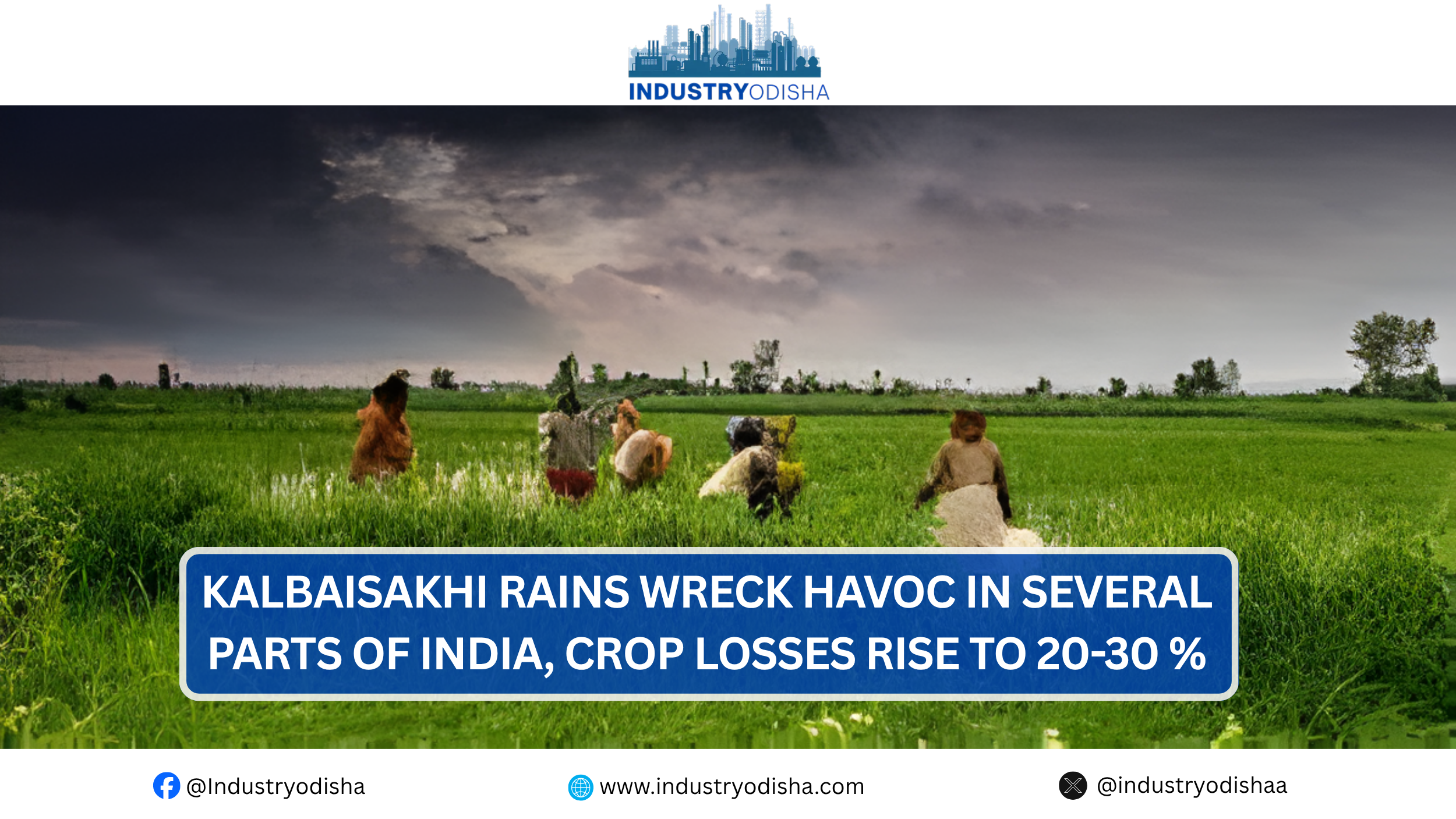
While the pre-monsoon Nor’westers (colloquially called ‘Kalbaisakhi’/’Bordoisila’) have already shown ugly faces since March and expected to extend till May, Nor’westers have reportedly wrecked havoc in most areas of Odisha, West Bengal and Assam lashing heavy rainfall, thunderstorms and hailstorms.
Adding fuel to the fire, the back-to-back Western Disturbances have now struck as a bolt from the blue as they are reportedly affecting the regions of north India following which the Indian states of Punjab, Haryana, Delhi, Uttar Pradesh, Rajasthan, Himachal Pradesh, Jammu and Kashmir are being reportedly pounded by rain, thunderstorms, hailstorms and snowfall in the higher reaches.
Moreover, the Indian Meteorological Department (IMD) has already made its further weather forecasts warning the regions of north and central India against the continuation of rain, thunderstorm and hailstorm activities till May 31 as a result of the Western Disturbances.
Such erratic weather conditions or patterns hit hard the Rabi farmers as their standing crops are at risk, and the damage caused is obviously going to hurt their income level as well as disrupt supply chains resulting in inflationary pressures.
It has reportedly been indicated that the Western Disturbances have “caused crop losses of around 20-30% in several districts of those affected regions”.
According to the experts, a hurt harvest gets automatically reduced yield, lower market arrivals, spiking up of market prices that eventually results in a hike in the Consumer Price Index (CPI) inflation.
Despite the large-scale industrialisation spree being witnessed in India over the years, especially in the post-Independence era (1947 onwards), the Indian sub-continent is an agrarian economy since ages when human beings learnt the art of agriculture and started settling down in hamlets and villages.
Thus, agriculture and allied sectors (rearing animals/sale of meat & dairy products) remain the backbone of Indian economy as they “provide livelihood for 55% of the population even though they contribute around 18-20% to India’s Gross Domestic Product (GDP)”.
It is now being waited and watched how both the Central and respective State Governments tackle the situation by paying out the affected farmers their due insurance compensations or announcing special relief packages even though the government’s fiscal deficits get further strained.
