



Industry Odisha Bureau, April 14: Close on the heels of China’s reportedly malicious move last month (March) to rename locations under the purview of Indian territory by allegedly assigning fictitious names that has already been spurned by the Government of India, yet another glaring instance has come to the fore that is anticipated to have far-reaching implications on India’s significant Brahmaputra river’s water volume.
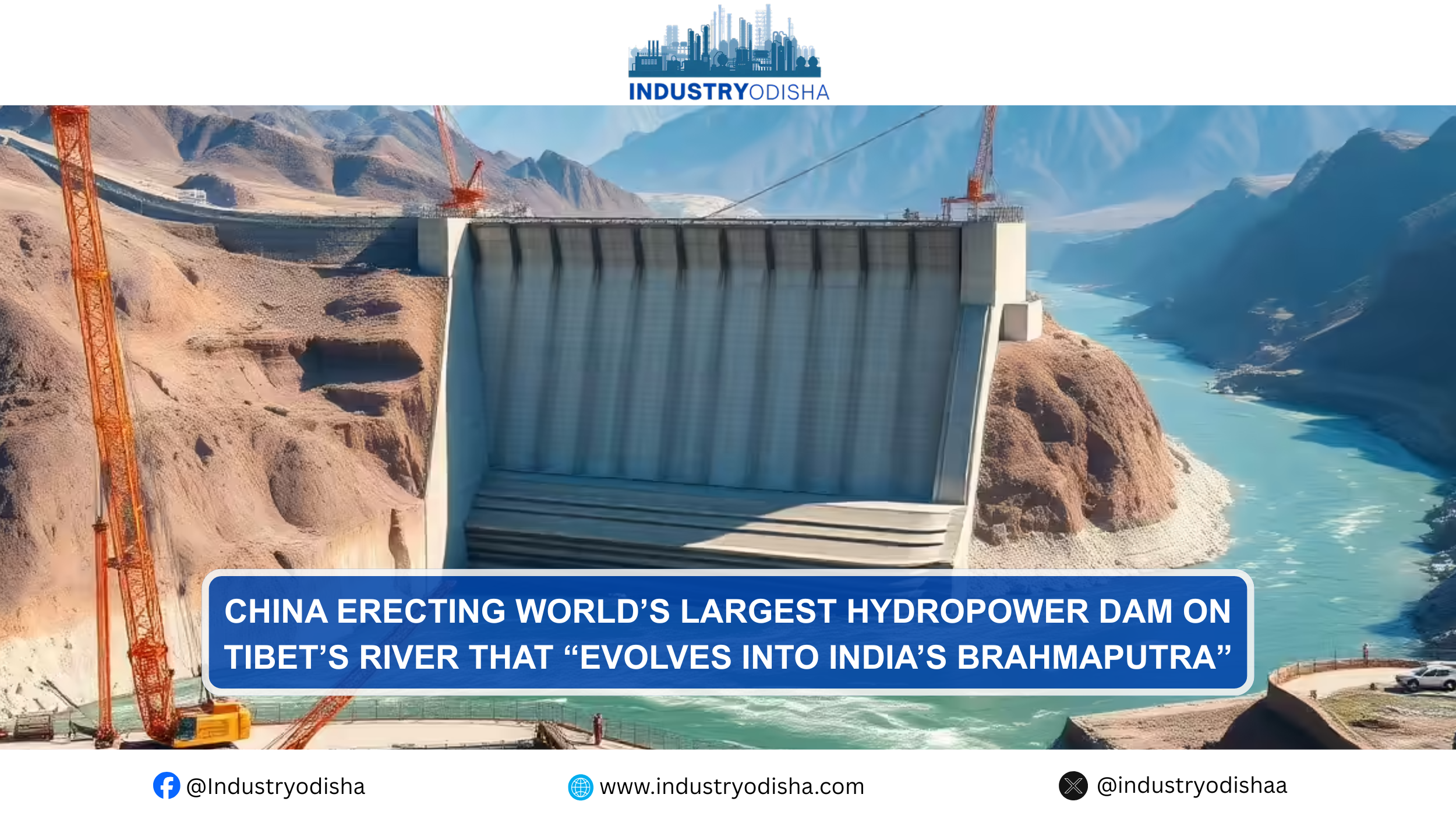
Media reports revealed that the new dam being constructed on Tibet’s Yarlung Tsangpo river is touted to be world’s largest hydropower project and even bigger China’s existing Three Gorges Dam that was reportedly slowing down Earth’s rotation.
China’s state media has also confirmed that the new colossal dam being built could exceed the capacity of the Three Gorges Dam.
It has also been reported that the estimated cost of this most massive dam on anvil is around 1.2 trillion yuan, while it has been designed to generate about 300 billion kilowatt (KW) hours of electricity per annum, claimed to be the world’s highest hydropower-generating facility.
Even though China has reportedly said that the new dam project would not affect downstream flow, the matter of utter concerns for India is that the Tibetan river Yarlung Tsangpo is part and parcel of a trans-boundary river system flowing into Bangladesh and India. Besides, India has already flagged this issue in the past complaining that China’s upstream water management could harm and hamper the river’s downstream flow.
Notably, “The Brahmaputra River originates from the Angsi Glacier (sometimes associated with the nearby Chemayungdung Glacier) located on the northern slopes of the Himalayas near Mount Kailash in Burang County, Tibet. It rises at an elevation of approximately 5,150 to 6,020 meters, where it is known as the Yarlung Tsangpo. It enters India in Arunachal Pradesh where it is called Dihang or Siang before becoming the Brahmaputra in Assam. The river passes through Assam and Bangladesh (named Jamuna) to merge with the Bay of Bengal eventually.”
Also Read :- India Spurns China’s Malicious Move To Rename Indian Territory Locations With “Fictitious Names”
