


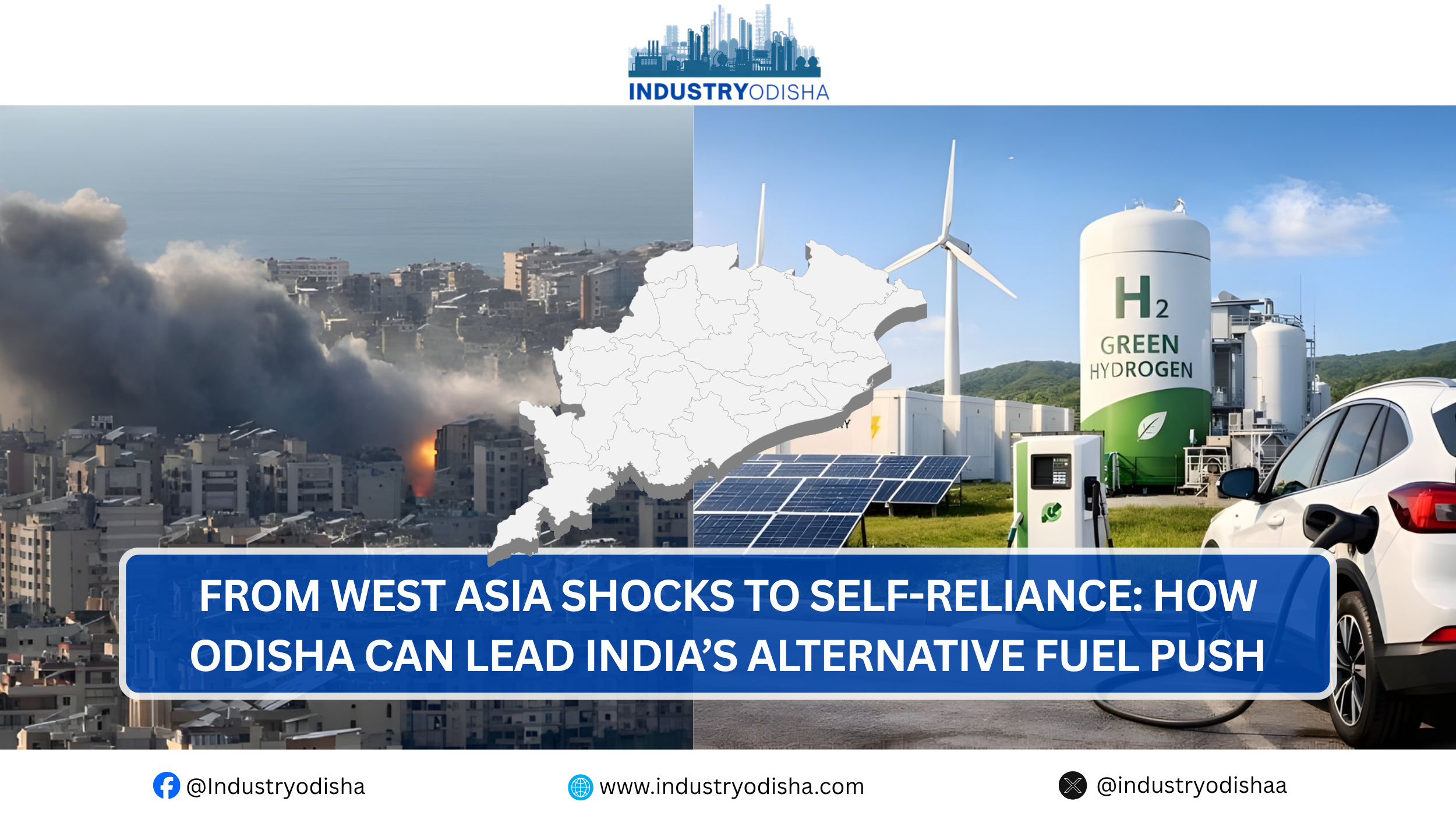
In a significant move, Iran on Wednesday said it would allow safe passage through the Strait of Hormuz for two weeks if attacks against it are halted. The development came after US President Donald Trump agreed to a temporary ceasefire framework just ahead of a self-imposed deadline that had raised fears of a wider regional war.
Though it has come as a major relief to the world and India, the West Asia crisis has exposed New Delhi’s vulnerability in the energy sector. India imports nearly 85% of its crude oil and over 50% of natural gas from other countries, out of which a large chunk originates from the West Asia region. So, any disruption in the region, whether geopolitical conflict, supply chain bottlenecks, or price spikes, quickly translates into domestic fuel shortages, rising LPG prices and industrial stress.
The recurring disruption is wake up call for New Delhi to rethink its energy strategy on how we should accelerate its transition to alternative fuels. Under these circumstances, Odisha can play a significant role in leading that transition. With its unique economic and geographic profile, it can turn this crisis into a strategic opportunity. Here’s how…
Biofuel
Biofuel—a renewable, biodegradable fuel produced from organic materials (biomass) such as plants, algae, or animal waste—can act as a major domestic alternative fuel and Odisha can play a significant role in unleashing its potential to the optimum. The state produces millions of tonnes of agricultural residue annually. However, much of it goes underutilised. According to experts, this agricultural residue can be converted to second-generation ethanol and compressed biogas (CBG), which in turn can reduce dependence on imported fuels.
Presently, Odisha’s ethanol sector, despite being small in comparison to other states, holds strategic promise. The five distilleries, with 20 litres annual capacity and 29 approved projects, indicate the state’s push towards its expansion. By leveraging surplus paddy and broken rice, Odisha can scale grain-based ethanol without disrupting agriculture. With India eyeing 20% ethanol blending, every litre produced can reduce oil imports and buffers shocks from West Asia crises. If Odisha manages to expand its capacity to 100+ crore litres, it can transform from a marginal player into a key hub of India’s energy security and alternative fuel economy.
Solar Energy
At a time when the state is becoming a role model for others to follow its policy on solar energy, it can lead India’s solar transition by strengthening its vast untapped potential. Currently, despite targeting 10,000 MW solar capacity by 2030, it utilises only a fraction of its capability. With more than 180 reservoirs suitable for floating solar and high solar irradiance, Odisha can rapidly scale generation without land conflicts. Solar power can not only reduce dependence on imported fossil fuels, but it can also power green hydrogen and electrify transport by turning sunlight into a stable, domestic, and clean energy alternative.
Green hydrogen
Green hydrogen, produced by splitting water into hydrogen and oxygen using renewable electricity through a process called electrolysis, could be a critical enabler of the global transition to sustainable energy and net zero emissions economies, feel experts.
India’s National Green Hydrogen Mission, launched in January 2023 with a ₹19,744 crore outlay, aims to make the country a global hub for producing, using, and exporting green hydrogen. The target is to achieve 5 MMT annual production by 2030, supported by 125 GW of renewable energy, reducing imports by ₹1 lakh crore.
Odisha, with its port access and industrial clusters, can fasten this transition. By developing hydrogen hubs around Paradip and Dhamra, the state can reduce industrial dependence on volatile Liquified Natural Gas (LNG) markets and attract global investment in clean manufacturing.
Most importantly, it can position itself as a supplier of green fuels to both domestic and export markets.
Odisha has the resources, industry, coastline and policy push to lead India’s alternative fuel revolution. Speed, scale and strategic clarity are required to give it to lead the country’s alternative fuel revolution.
Also Read :- Relief for students and migrants: Odisha Govt issues clarification on 5kg LPG cylinder refill
