



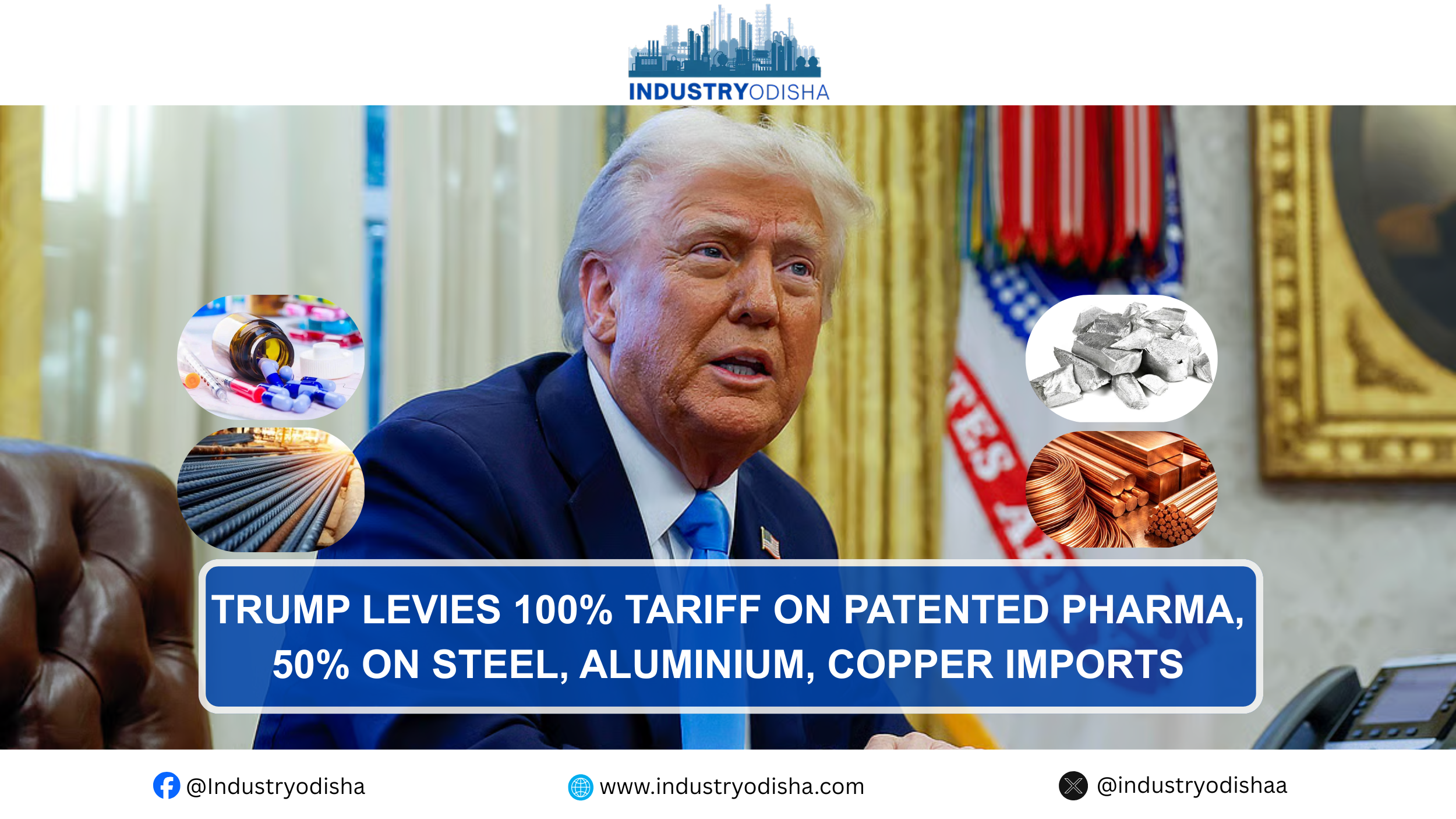
Industry Odisha Bureau, April 3: Imposing yet again steep tariffs on imported goods entering the US markets with effect from upcoming April 6, President Donald Trump on Thursday (April 2) has already accorded his seal of approval to the official proclamation.
In accordance with the sweeping proclamation, 100 per cent tariffs have been levied on the patented pharmaceuticals to be imported into the markets of United States of America, while 50 per cent tariffs have been imposed on the imports of steel, aluminium and copper.
It has been reported by media that such a move has been initiated by the incumbent Trump regime in a bid to “further tighten trade controls in the name of national security risks.”
Issuing the proclamation, the US President said that the pharmaceuticals as well as the related ingredients “are being imported into the United States in such quantities and under such circumstances as to threaten to impair the national security of the United States.”
On the contrary, the proclamation said, “Generic pharmaceuticals and their associated ingredients shall not be subject to tariffs… at this time.”
Notably, India and China are among the largest producers of generic medicines and active pharmaceutical ingredients (APIs) globally and supply enough amounts to the US markets. Even though the generic pharmaceuticals have been exempted for the time being, if levied in future as anticipated, such a move could have “wider implications for global drug pricing and supply chains”.
It has also been reported that “most primary steel and aluminium products will face a 50 per cent ad valorem duty, while certain derivative products will be subject to a 25 per cent tariff.”
It has further been reportedly stated that the Trump administration aims at “ensuring importers of steel, aluminium and copper pay duties based on the actual transaction prices rather than artificially lowered values”.
The Trump administration officials also reportedly argued that the fresh measures “would not affect consumer prices as the changes primarily affect trade mechanics rather than retail pricing”.
