



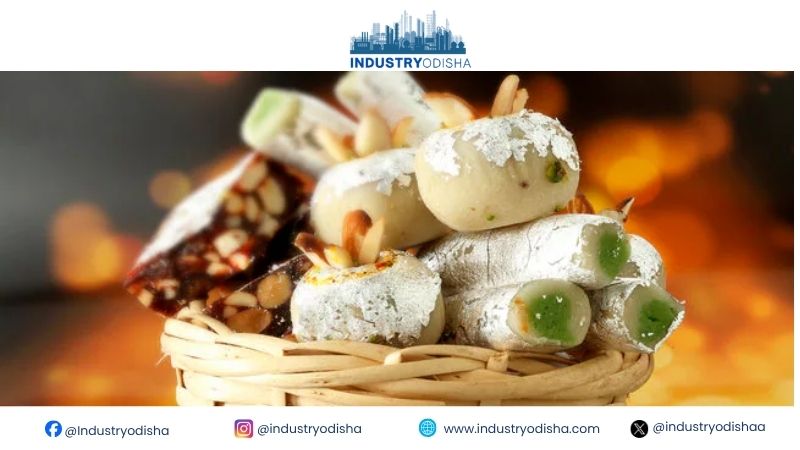
Industry Odisha Bureau, Oct 21: Sweet sellers face shelf-life rules in Uttar Pradesh and Uttarakhand during peak festive trade. Smaller makers fear costs and paperwork, as milk, sugar and dry fruit prices climb.
India’s mithai makers face an awkward question ahead of Diwali: how long do sweets last? Several states now require manufacturing and use-by dates to be displayed, even on loose sweets. Uttar Pradesh and Uttarakhand are among those making it mandatory, The Economic Times reported.
A manufacturing date shows when a sweet was made. A use-by date shows how long it remains suitable to eat. The agencies said inspections found buyers were not always told this clearly. Labelling loose sweets is harder than printing dates on sealed packs. Yet such disclosure can help shoppers judge freshness and build trust in festive purchases.
Small and medium-sized sellers say frequent inspections and notices are hampering festive operations. Firoz H Naqvi heads the Federation of Sweets and Namkeen Manufacturers. He said fixing shelf life for each variety may require hiring external agencies. That would add costs and workload during the busiest season. Shelves are also restocked many times a day, he noted. Shelf life also varies with ingredients, moisture, storage temperature and packaging.
The Uttar Pradesh Mithai Namkeen Bakery Association has sought a gentler approach. It wrote to the state Food Safety and Drug Administration (FSDA) on October 11. The group asked for time, training and technical guidance for smaller traditional businesses. For minor lapses in display, documentation or records, it sought a chance to fix them. Such lapses differ from serious food safety violations.
Maharashtra, Karnataka and Haryana have also stepped up checks against festive adulteration. Demand for sweets, edible oils and dairy typically spikes during festivals. Maharashtra Food and Drug Administration commissioner Tukaram Mundhe has led wide inspections. Restaurants, hotels, cloud kitchens, dairies, dark stores and factories have been checked.
Nationally, the Food Safety and Standards Authority of India (FSSAI) has urged tighter state surveillance. It has also issued notices to major firms over alleged misleading claims and labelling lapses. Such notices do not by themselves establish wrongdoing.
The rules arrive as input costs bite. Milk, dairy, dry fruit, sugar and gram flour prices hit records this year, ET reported. Suresh Goel, Bikanervala Foods’ chief executive, said rising input and fuel costs would squeeze margins. He added that festive inspections are routine and hygiene is now built into processing. Even unorganised players have adopted better practices since Covid, he said. Larger firms may absorb compliance costs more easily than family-run shops.
The festive period brings about 35% of organised sellers’ annual sweet sales. For unorganised sellers, it exceeds 40%. Disruption at this time therefore carries a heavy price.
Consumers deserve clear freshness information. The challenge is enforcing that without unduly disrupting small traditional sweet sellers. Clear guidance and proportionate checks could serve both goals.
