



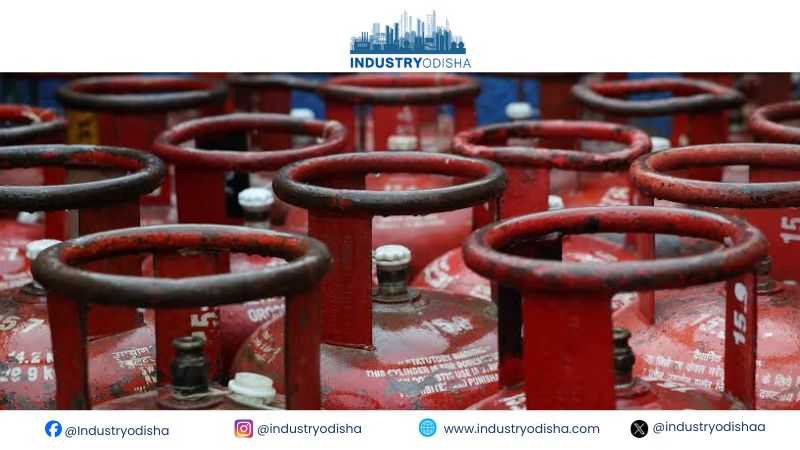
Industry Odisha Bureau, Sep 08: Getting an LPG connection turns out to be easy. Actually using it consistently proves far harder. New CEEW research reveals a striking usage gap. Just 23% of rural households rely exclusively on LPG.
This finding sits alongside a more encouraging statistic. Some 73% of rural households used LPG recently. That’s within the previous ninety days, according to surveys. Yet exclusive dependence remains dramatically lower than recent usage.
Half of surveyed rural households still primarily burn firewood. LPG hasn’t replaced traditional cooking fuel for many families. Access alone hasn’t translated into consistent behavioural change yet. Something is preventing sustained adoption despite widespread cylinder distribution.
Delivery logistics appear central to this persistent gap. Only 47% of rural LPG users receive doorstep delivery. Without reliable delivery, refilling cylinders becomes genuinely inconvenient. Last-mile logistics, researchers suggest, directly shapes usage patterns.
Cost compounds the delivery problem significantly further. Researchers tested household willingness to pay at various prices. At Rs 400 per cylinder, 80% would switch exclusively. Median willingness to pay actually sits near Rs 500.
Compare that to the current subsidised PMUY rate. Households pay Rs 642 under existing subsidy arrangements. That gap between willingness and actual price matters enormously. Affordability, not availability, may be the real barrier.
Migrant workers face an entirely different set of obstacles. Formal LPG connections remain largely inaccessible to this group. Some 79% of migrant LPG users lack formal connections. Fewer than 4% have enrolled under PMUY specifically.
This happens despite a 2021 provision easing enrolment requirements. Simplified self-declarations were meant to remove documentation barriers. Awareness gaps, not just paperwork, appear to limit uptake. Many migrants simply don’t know these provisions exist.
Without formal access, informal markets fill the void instead. Migrants buying informally pay roughly Rs 71 per kilogram. That’s more than twenty percent above formal LPG rates. Financial penalty compounds an already difficult access problem.
Urban informal settlements show a related but distinct pattern. Exclusive LPG use there actually reaches 70%, higher than rural areas. Yet documentation problems still block many households nonetheless. Missing address proof leads some toward costly informal purchases.
Some urban residents pay Rs 1,040 for cylinders informally. Formal retail pricing, by comparison, stands at Rs 803. The premium paid reflects documentation gaps, not fuel scarcity. Households pay more precisely because formal channels remain closed.
CEEW researchers argue policy must shift focus now. Counting connections tells an incomplete story about clean cooking. Sustained affordability, reliable delivery and awareness matter more going forward. The studies recommend raising PMUY subsidies by roughly Rs 200.
Additional recommendations include targeted migrant enrolment campaigns specifically. Smart-meter kiosk pilots and revised distributor commissions also feature prominently. These proposals aim to strengthen doorstep access particularly in rural areas.
The underlying message is straightforward, if uncomfortable. Connection numbers alone cannot measure genuine clean-cooking transition. Whether households actually cook with LPG regularly matters most. That question, researchers suggest, deserves far greater policy attention.
