



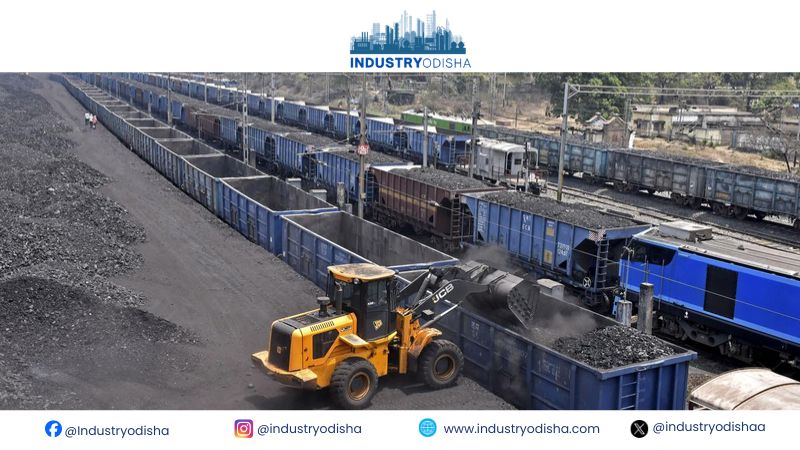
Industry Odisha Bureau, Sep 07: India is stepping up coal shipments by rail to power plants. This follows a rise in generators facing critically low inventories. The affected-plant count reached 58 by September 5. Heavy rainfall has disrupted coal mining and transportation. Coal remains central to India’s electricity generation, raising the stakes.
The number of plants holding below 25% of required coal stocks has grown steadily. It rose from 46 at the end of August to 58 by September 5. That’s an increase of 12 plants in roughly a week. These generators hold less than three days of coal for power generation.
Central Electricity Authority data shows 53 of the affected plants run on domestic coal. The CEA operates as a think tank linked to the federal power ministry. Its figures form the basis for tracking plant-level fuel security nationwide.
To address the shortfall, coal dispatches have picked up sharply since September 3. Rail loading to power plants rose to 444 rakes on September 6. That’s up from 370 rakes just three days earlier, government data showed. The increase reflects a coordinated push involving Coal India, its subsidiaries and private mines.
Rainfall across key producing states lies behind much of the pressure. Odisha, Jharkhand and Chhattisgarh have all seen disrupted mining operations. Heavy rain has also slowed coal transportation from these regions. Both extraction and movement have been affected simultaneously, compounding the supply strain.
Coal’s dominance in India’s power mix makes this disruption consequential. The fuel accounts for roughly three-quarters of the country’s electricity generation. Any prolonged gap in supply chains can pressure grid reliability. That’s why sustained rail dispatches matter beyond just plant-level statistics.
Separately, Coal India reported holding 76 million tonnes at its pitheads. The company describes itself as the world’s largest coal miner. This pithead stock, however, is distinct from what individual power plants hold. Large reserves at mining sites don’t automatically translate into full plant inventories.
That distinction underscores the core challenge here. Coal availability, transportation capacity and plant-level stocks are three separate variables. Rainfall has strained the middle link: getting coal from mines to plants. Rakes measure train shipments, not tonnage, and both metrics matter differently.
The coal ministry says it’s closely monitoring critical thermal plants nationwide. It has also confirmed corrective supply measures are already underway. The ministry framed this as an active response rather than an emergency declaration.
Whether the 58 affected plants see inventories recover will depend on rail dispatch consistency. Daily loading gains suggest supply chains are responding to the rainfall disruption. But sustained rakes will need to keep pace with the affected states’ recovery. For now, the pressure on coal logistics remains a factor for grid planners to watch closely.
