



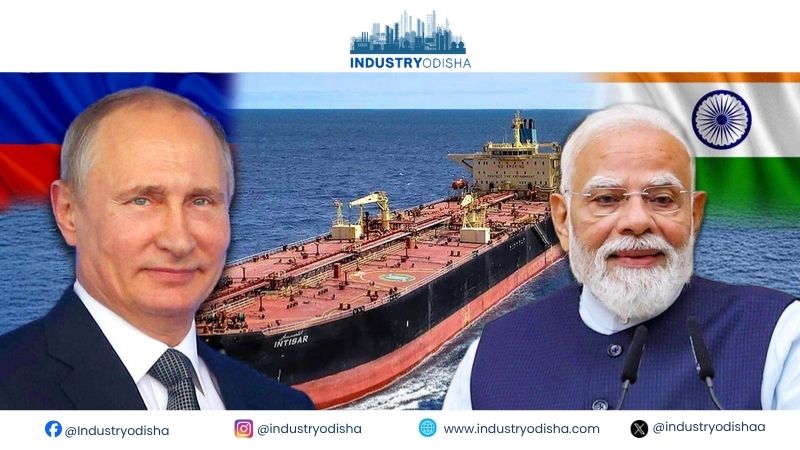
Industry Odisha Bureau, Aug 30: Russia, historically a major crude exporter, is now importing gasoline in volume. Ukrainian drone strikes on domestic refineries have curtailed fuel-making capacity sharply. Indian refiners have stepped in as a significant new supply source.
Seaborne gasoline shipments into Russia climbed to roughly 125,000 barrels daily in August. That translates to nearly 470,000 tonnes for the month, according to Vortexa. Analysts at the energy-tracking firm linked the surge directly to refinery outages.
Indian exporters shipped close to one million barrels of gasoline recently. Trade sources traced most of that volume to Gujarat’s Vadinar refinery facility. Nayara Energy runs the plant and is half-owned by Russia’s Rosneft.
India’s own crude sourcing has shifted heavily toward Russia since 2022. Russian barrels exceeded 2.6 million bpd of India’s imports during June-July. That represented more than half of India’s total crude purchases. Volumes had climbed sharply from around one million bpd back in February. Some gasoline sent to Russia may trace back to that Russian crude.
Refinery damage reportedly cut domestic Russian output by up to 70%. The resulting shortage forced Moscow to import fuel from several countries. India, Turkey and Morocco each supplied gasoline to Russia in August.
Moscow simultaneously extended a blanket gasoline export ban through January 2027. That restriction applies to both fuel producers and non-producing exporters alike. A separate diesel export ban runs through September 1, 2026.
Roughly 55%, or about 260,000 tonnes, moved on sanctioned tankers, Vortexa said. Every India-origin cargo Russia imported reportedly traveled aboard sanctioned vessels in August. Those shipments relied on covert ship-to-ship transfers within Mediterranean waters. About 40% of total August gasoline imports involved such transfers. Most vessels switched off tracking signals during these transfer operations, Vortexa noted.
Diesel tells a different story from gasoline’s import surge. Russian diesel exports stayed severely limited by bans and infrastructure damage. Vortexa documented 32 separate refinery attacks across July and August combined. Seaborne diesel exports held near 150,000 bpd through late August. That marked a decline of roughly 610,000 bpd from a year earlier. Exports also ran about 81% below their five-year seasonal average.
Vortexa anticipates continued Russian gasoline imports over the coming months. Russian refineries historically yield less gasoline relative to diesel than needed. Global fuel-trade patterns are shifting as refinery disruptions ripple outward. India’s refining sector now sits squarely within that changing energy landscape.
