



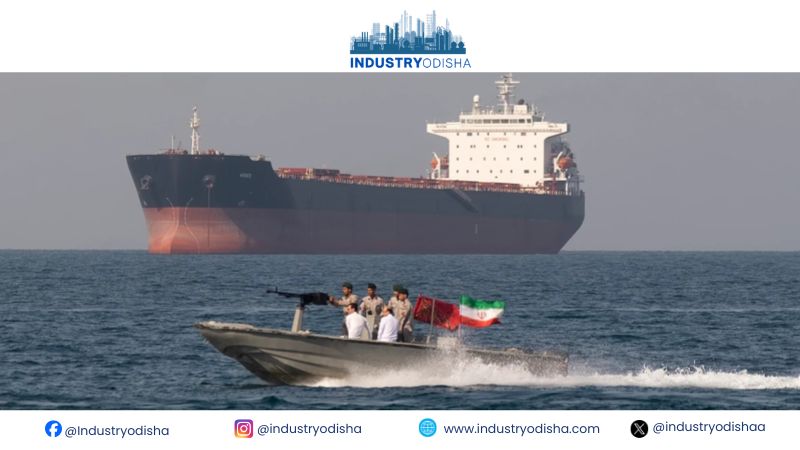
Industry Odisha Bureau, Aug 26: Iran has blacklisted 45 vessels for alleged breaches of its transit protocols. The Persian Gulf Strait Authority placed an India-linked bulk carrier on the list. Maha Roos, a bulk carrier owned and operated by Indian entities, was included. Vessels on Iran’s list face potential fines, detention, or confiscation in future transits. A Pakistan-flagged crude oil tanker specifically named Mardan has also been blacklisted. The majority of the blacklisted vessels are linked to United Arab Emirates-based entities.
The Strait of Hormuz remains critical for global energy and maritime trade. The waterway had historically been governed by principles of international maritime law before escalation. Iran has recently sought to impose its own shipping corridor through the strategic chokepoint. Not all vessels have complied with Iran’s proposed routing requirements through northern sections. The route backed by the United States runs off Oman’s coast and contested. Disruptions to normal shipping patterns could affect crude oil transportation and energy supplies broadly.
At least 14 of the 45 blacklisted vessels have already been damaged in incidents. The International Maritime Organisation confirmed these incidents occurred in or near the strait. Britain’s maritime security agency UKMTO classified all incidents as attacks but did not specify responsibility. The vast majority of these incidents occurred off Oman’s coast along the contested route. One crew member aboard the tanker Al Bayyah died in an incident in July. These prior incidents underscore the volatile maritime environment for commercial shipping today.
According to maritime tracking data, 39 of the 45 vessels are commodity carriers. These carriers have transited the Strait of Hormuz repeatedly since early March this year. Some vessels have crossed the strait as many as twelve times during this period. Kpler tracked more than 170 voyages by these commodity carriers during the analyzed timeframe. Approximately 75 of these voyages had a UAE port as their next destination. Around 70 voyages indicated their last loading stop occurred within UAE territory specifically.
For India, the blacklisting carries specific significance given energy trade patterns and shipping routes. Several blacklisted vessels have transported energy cargo to India during previous maritime voyages. India depends heavily on maritime transportation for energy imports through this critical chokepoint. Uncertainty around shipping restrictions could complicate supply chain planning for energy buyers. The inclusion of Maha Roos signals direct exposure for Indian-linked maritime commerce and operations. Any sustained disruption could affect energy transportation costs and insurance premiums regionally.
The blacklist also highlights the importance of UAE-based shipping networks in global trade. At least one-third of the blacklisted vessels are owned by Emirati companies directly. Most vessels on the blacklist maintain operational or commercial ties to UAE ports. This concentration suggests the strategic role Gulf-based networks play in commodity trade patterns. Growing uncertainty around Strait of Hormuz shipping could increase planning complexity for shippers. The balance between uninterrupted maritime trade and geopolitical tensions remains precarious and dynamic.
