



Industry Odisha Bureau, Aug 22: India’s economy displayed distinctly mixed signals this week across multiple economic sectors. Export momentum remained strong while the RBI expressed persistent inflation concerns. However, monsoon forecasters have sharply downgraded rainfall expectations, raising drought risks considerably. This combination of divergent economic developments complicates the near-term macroeconomic outlook significantly.
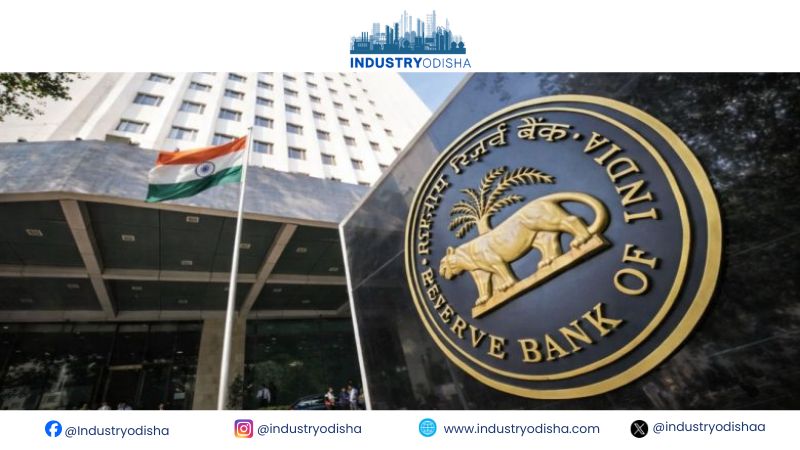
The Reserve Bank of India kept its policy repo rate unchanged at 5.25% during August’s monetary policy meeting. The central bank maintained a neutral policy stance even as its internal minutes struck a notably hawkish tone. RBI policymakers remained focused on inflation risks despite limited evidence of broad-based price pressures across the economy. MPC member Ram Singh noted that 69% of the weighted consumer price index basket recorded inflation of 4% or less in June. However, Singh cautioned that the inflation distribution was distinctly shifting toward higher price categories.
More recent data from July showed that 28% of consumer price items recorded inflation above 4% per cent. The RBI’s governor and other monetary policy members said limited signs of inflation generalisation had emerged. But policymakers warned that food and fuel shocks could generate second-round effects across the broader economy. This cautious stance explains the hawkish tone despite unchanged interest rates at this policy meeting.
India’s external sector offered a sharper signal of underlying economic resilience and international demand. Preliminary commerce ministry trade data showed that India’s exports expanded across several key markets in July. The United States remained India’s largest export destination, accounting for 20.4% of overall shipments. US exports increased nearly 13% year-on-year, reaching their highest level since March 2025. Four other major export destinations recorded particularly strong double-digit growth rates during July.
Singapore exports jumped 83.7% year-on-year in July compared to the same period last year. Malaysia recorded export growth of 73%, while Japan imports from India increased 65.3% during this period. China purchased 64.6% more Indian exports compared to July a year earlier. The top 10 destination markets accounted for more than half of India’s total exports. However, commodity price movements likely inflated some of these nominal shipment values reported.
India’s monsoon outlook has deteriorated sharply, presenting a significant macroeconomic risk for the coming months. Skymet, a major private weather agency, revised its rainfall forecast to 85% of the long period average. In April, Skymet had predicted rainfall would reach 94% of the long period average. The agency simultaneously raised drought probability to 70% from its earlier 30% forecast substantially. Strengthening El Niño conditions and uncertainty over the Indian Ocean Dipole explain this negative revision.
Actual rainfall between June and July fell 13% short of historical long period average norms. Skymet expects August and September to remain deficient, continuing the weak monsoon pattern considerably. A weaker monsoon could hurt kharif crop yields across India’s agricultural regions significantly. Rural incomes could come under pressure from reduced agricultural output and farm revenues. Food prices may face upward pressure from tighter supplies and reduced domestic agricultural production.
Rural female labour force participation jumped sharply in July, driven by significant employment changes. Rural women’s labour force participation rate reached 38.8% in July compared with 36.6% in June. This represented a substantial 220 basis point increase during a single month. Rural female participation had stood at 36.9% a year earlier, showing strong year-on-year gains. Urban female labour force participation increased modestly by 50 basis points to 25.3%.
The government approved substantial infrastructure and manufacturing investments during the latest reporting week. Electronics component projects received ₹7,877 crore under the ₹40,000 crore Electronics Components Manufacturing Scheme. Railway capacity expansion and highway projects secured ₹13,041 crore in approved investment funding. These railway projects will expand India’s network by approximately 410 kilometres of track. An additional ₹10,000 crore was planned for developing more than a dozen national waterways. These investments signal medium-term capital formation potential across manufacturing and infrastructure sectors.
Foreign portfolio investors returned to Indian equities in July after an extended selling period. Consumer services attracted the strongest inflows at $1.06 billion during July’s trading activity. Healthcare sectors received $0.81 billion in inflows after nearly 15 months of consecutive outflows. Consumer durables attracted $0.77 billion while metals and mining received $0.51 billion. Capital goods recorded the largest net outflow at $0.66 billion during this period. Telecommunications and automobile sectors also recorded notable outflows during July’s trading sessions.
India’s economic indicators suggest resilience in exports, labour markets and capital formation remains robust. However, inflation concerns and monsoon risks present genuine vulnerabilities to this economic momentum. The RBI’s cautious stance reflects legitimate concerns about inflation persistence and potential agricultural shocks. How these divergent factors interact will substantially shape India’s economic trajectory over coming months.
