



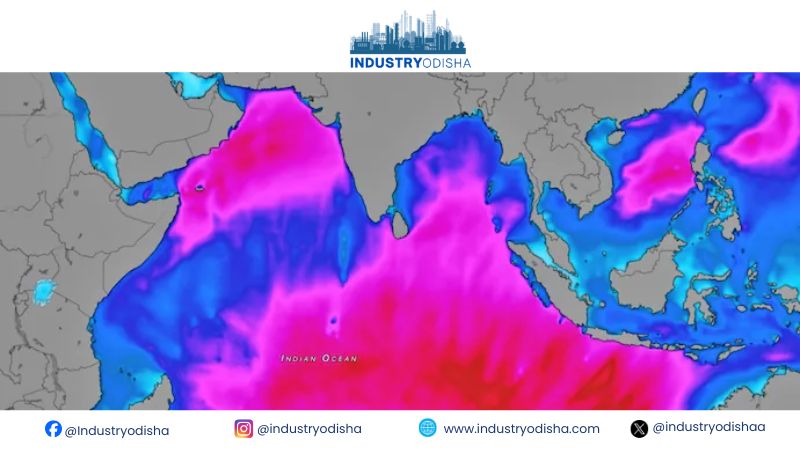
Industry Odisha Bureau, Aug 22: Forecast models indicate that El Niño could reach unprecedented strength this year, with Pacific waters potentially warming more than three degrees above historical averages. For India, this represents additional pressure on both the monsoon and agricultural production immediately. The prospective warming would dwarf most El Niño events recorded in modern climate history, according to Britain’s Met Office.
Adam Scaife, head of long-range forecasting at the UK Met Office, calls the forecast unprecedented in intensity and scale. A two-degree Pacific warming is typically considered a major climate event globally, yet current projections exceed three degrees substantially. The previous record El Niño in 2015-16 peaked at roughly a three-degree temperature anomaly, but forecasters now anticipate even stronger conditions. Scaife emphasised these represent persistent long-term climate patterns rather than short-term weather variations.
Forecast models project the warming could reach approximately 3.9 degrees by November, according to the Climate Brink dashboard, which aggregates US government data. Pacific sea-surface temperatures currently stand about 2.6 degrees above the rolling thirty-year historical average, substantially above normal ranges. The unprecedented magnitude suggests this event could significantly influence global temperatures throughout 2026 and into 2027.
El Niño typically exerts its strongest influence on global temperatures during the year after onset, which explains twenty twenty-seven’s elevated heat risk. Global temperatures in 2024 already exceeded 1.5 degrees above pre-industrial levels, and stronger El Niño effects could challenge that record. Met Office scientist Nick Dunstone said 2027 is very likely to replace 2024 as the warmest year recorded globally.
El Niño involves warming of the central and eastern equatorial Pacific Ocean, triggering cascading shifts in winds and rainfall worldwide. These naturally occurring climate events typically occur every two to seven years and last between nine and twelve months. Understanding El Niño is critical to predicting Indian monsoon behavior and agricultural outcomes across the coming seasons.
India’s monsoon now faces additional pressure from this exceptionally strong El Niño forecast emerging from the Pacific warming patterns. The India Meteorological Department projects full-season rainfall at ninety percent of the long-period average, the lowest projection in eleven years. Monsoon weakness typically affects soil moisture levels, crop sowing decisions and yields across multiple agricultural zones throughout India.
OP Sreejith, head of climate monitoring at India’s meteorological department, expects India could still experience strong heatwaves in 2027. Regional temperature outcomes depend significantly on how the monsoon actually performs during the critical monsoon season in India. Combined El Niño effects and potential heatwaves create agricultural uncertainty extending across multiple crop cycles simultaneously.
Agricultural impacts could extend from the current Rabi season directly into the 2027 growing season, according to climate experts. Raghu Murtugudde, visiting professor at IIT-Kanpur and University of Maryland emeritus scholar, warned that impacts could persist across multiple years. The 2023 and 2024 agricultural years were already affected by El Niño conditions, creating cumulative stress on farm output.
Weaker rainfall could strain soil moisture reserves while spring heatwaves might increase agricultural stress during the critical growing period. The government has already implemented safeguards involving sugar and edible oil supplies, suggesting elevated food-supply risks are anticipated. These interventions reflect expectations of challenging agricultural conditions and potential pressure on food availability and prices.
The economic consequences of this El Niño event depend heavily on monsoon performance and agricultural outcomes across coming seasons. Rural incomes, food security and food-price pressures remain sensitive to rainfall patterns and temperature conditions in 2027. India’s broader agricultural resilience will depend on how monsoon conditions actually materialise against the current climate forecast.
