


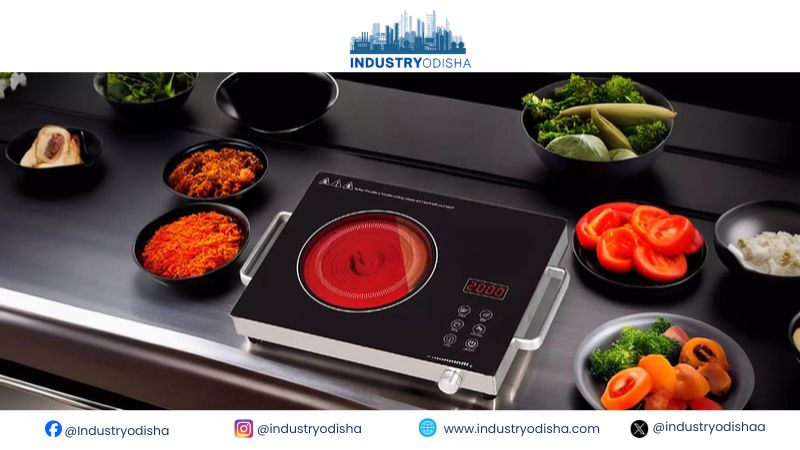
Industry Odisha Bureau, Aug 9: Deeming electric induction cookstoves to be a reportedly right substitute to reduce the risk being posed to nearly 340 million Indian consumers by the supply chain disruptions of LPG/cooking gas, and also the electric induction cookstoves being reportedly estimated to be costing about a third less than the conventional cooking methods, the Government of India (GoI) is reportedly planning to speed up the adoption of the cooking gadget more and more across the country.
As per media reports, “The Government of India (GoI) is considering induction cooktop subsidies and lowering customs duties on key components. Additionally, gearing up to upgrade the existing electricity distribution infrastructure.”
Media reports have claimed that, “Deliberations in this regard have already started between the officials and representatives of NITI Aayog, Ministry of Power, Ministry of New and Renewable Energy (MNRE), Department for Promotion of Industry and Internal Trade (DPIIT), power distribution companies (Discoms), and industries.”
Media reports have added that, “The representatives of the power Discoms have expressed that the proposed adoption of electric induction cookstoves in a large largescale would require a nationwide assessment of household electricity loads, changes in the domestic electricity wiring as well as upgradation of the electricity distribution infrastructure.”
The Media reports have further stated that, “During the deliberations, the participating officials and representatives have also found out that most of the key components of an electric induction cookstove, such as the induction cookstove glass, coil, printed circuit boards (PCB) and DC fan, are mostly imported from China, while the GoI is planning to reduce this dependence on imported components too.”
Media reports have also stated that, “The representatives of the industries, dealing with the electric induction cookstoves, have already sought reduction in the customs duty as well as reduction of the Goods and Services Tax (GST) from existing 18% to 5% on the key components imported.”
